The History and Evolution of Graffiti Art: From Ancient Walls to Modern Masterpieces
From ancient cave markings to the vibrant murals that define modern cities, graffiti art has undergone a remarkable transformation. Explore the fascinating journey of this art form across centuries and continents.
The ancient roots of graffiti
Long before spray cans existed, humans felt the irresistible urge to mark their presence on walls. The term "graffiti" itself comes from the Italian word "graffiato," meaning scratched, and its roots trace back thousands of years. Ancient civilizations in Egypt, Greece, and Rome left inscriptions on walls, political messages, declarations of love, and everyday observations that give us a window into life centuries ago.
In Pompeii, archaeologists discovered over 11,000 examples of ancient graffiti, from electoral slogans to personal advertisements. These weren't vandalism, they were an integral part of public communication. Similarly, Viking explorers carved runic messages in places as far-flung as the Hagia Sophia in Istanbul, leaving evidence of their journeys for future generations.
This fundamental human impulse to express, communicate, and leave a mark is precisely what makes graffiti so enduring. It's not a modern phenomenon, it's woven into the fabric of human history. Understanding this context helps us appreciate why graffiti workshops resonate so deeply with participants of all ages and backgrounds.
The birth of modern graffiti: Philadelphia and New York
The graffiti movement as we know it today began in the late 1960s in Philadelphia, where writers like Cornbread and Cool Earl started tagging their names across the city to gain attention and fame. This practice quickly spread to New York City, where it found its spiritual home in the boroughs of the Bronx, Brooklyn, and Manhattan.
The subway era (1970s–1980s)
New York's subway system became the world's most famous moving canvas. Writers like TAKI 183, who famously tagged his name across the city in 1971, inspired a generation of young artists. The subway cars became rolling galleries, carrying art from neighborhood to neighborhood and making artists famous overnight.
The 1970s saw the development of distinctive styles that would define graffiti culture:
- Tags, stylized signatures that served as a writer's identity
- Throw-ups, quick two-color bubble letters for maximum coverage
- Pieces, elaborate, multi-colored works short for "masterpieces"
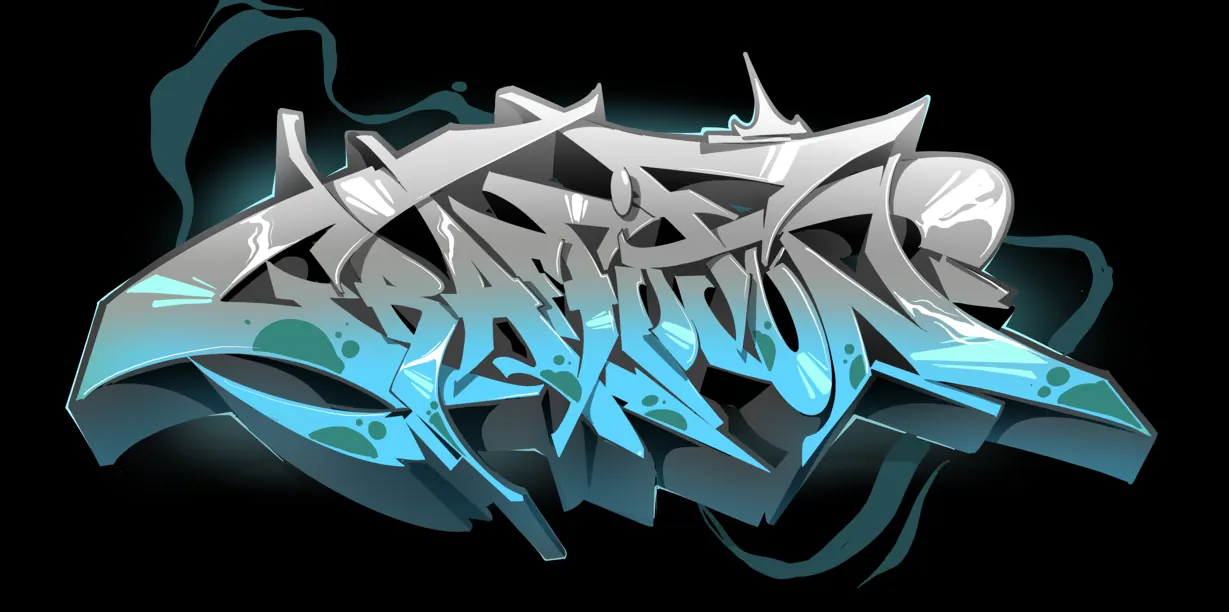
- Wildstyle, interlocking, complex letter forms that became the pinnacle of graffiti artistry
Key figures emerged during this golden era: LEE Quiñones, SEEN, DONDI, LADY PINK, and FUTURA 2000, among others. These artists pushed the boundaries of what was possible with spray paint, developing techniques that are still taught in street art workshops around the world today.
The cultural crossroads
Graffiti didn't exist in isolation, it was one of the four pillars of hip-hop culture, alongside DJing, MCing, and breakdancing. This connection to music and dance gave graffiti a cultural depth that transcended mere visual expression. Block parties in the Bronx became incubators for all four elements, creating a cultural movement that would eventually conquer the world.
The war on graffiti and the shift to galleries
The 1980s brought both the peak of subway graffiti and its decline. New York City's Metropolitan Transportation Authority launched aggressive anti-graffiti campaigns, introducing the "Clean Train Movement" in 1984. By 1989, the MTA declared victory, no graffiti-covered trains would run in service.
But the artists didn't disappear. They adapted. Gallery shows began featuring graffiti artists, with the Fun Gallery and Fashion Moda in the East Village leading the charge. Jean-Michel Basquiat, who began as the street artist SAMO©, became one of the most celebrated artists of the 20th century, his works now selling for over $100 million at auction.
Keith Haring, another artist who bridged the street and gallery worlds, brought graffiti aesthetics to a global audience through his iconic Pop Shop and public murals. These transitions proved that graffiti wasn't just vandalism, it was a legitimate, powerful art form.
The European expansion
While graffiti was born in America, Europe embraced it with particular enthusiasm. In the 1980s and 1990s, cities like Amsterdam, Berlin, London, Barcelona, and Paris developed their own vibrant graffiti scenes.
Amsterdam and the Dutch scene
The Netherlands became a hub for graffiti culture, with Amsterdam's tolerant atmosphere providing fertile ground for writers. The city's legal walls and progressive attitudes toward street art helped establish a tradition that continues today. This rich heritage is why corporate graffiti workshops in Amsterdam offer participants such an authentic creative experience.
Berlin: the wall and beyond
The fall of the Berlin Wall in 1989 created a unique canvas for graffiti artists. The East Side Gallery, a 1.3-kilometer stretch of the former wall, became the world's longest open-air gallery, featuring works by artists from around the world. Berlin's thriving street art scene continues to attract artists and tourists alike, and it remains one of the world's premier destinations for experiencing graffiti culture firsthand.
The Mediterranean influence
Spain, Italy, and Portugal brought their own flavors to the movement. Barcelona's vibrant street art scene, fueled by artists like Pez and El Xupet Negre, became inseparable from the city's identity. Lisbon's LX Factory and Bairro Alto neighborhoods showcase how graffiti can transform urban landscapes into open-air museums.
Graffiti techniques: from rattling cans to digital design
The technical evolution of graffiti has been remarkable. What started with stolen markers and basic spray paint has become a sophisticated art form with specialized tools and techniques.
Essential techniques every graffiti artist learns
- Can control, mastering spray distance, pressure, and speed for clean lines
- Fading and blending, creating smooth color transitions
- Cutting, using background color to create sharp edges and outlines
- 3D effects, adding shadows, highlights, and perspective to letters
- Character design, developing original figures that accompany lettering
These fundamental skills form the core of every graffiti workshop, where experienced artists guide participants through the creative process step by step. Modern workshops use professional-grade spray paints with low-pressure caps, making the art accessible even to complete beginners.
The digital revolution
Today's graffiti artists often blend analog and digital techniques. iPads and graphic design software help plan complex pieces, while drone photography captures finished works from angles previously impossible. Augmented reality apps even let artists preview their designs on walls before painting, and digital tools have opened up new possibilities for collaboration across borders.
Legal walls and the legitimization of graffiti
One of the most significant developments in graffiti's evolution has been the establishment of legal walls and sanctioned painting spaces. Cities worldwide now recognize the cultural and economic value of street art, designating specific areas where artists can paint freely.
Programs like the Wynwood Walls in Miami, the NDSM Wharf in Amsterdam, and Shoreditch in London have demonstrated that embracing graffiti culture can revitalize neighborhoods, attract tourism, and build community. These spaces also serve as living classrooms where emerging artists learn from experienced writers, much like a structured graffiti team building activity brings people together through collaborative creativity.
Graffiti today: a global art movement
In 2026, graffiti art has achieved a level of mainstream acceptance that pioneers like TAKI 183 could never have imagined. Major museums, the Museum of Contemporary Art in Los Angeles, the Tate Modern in London, the Stedelijk Museum in Amsterdam, regularly exhibit graffiti and street art.
Brands collaborate with graffiti artists for advertising campaigns, product designs, and experiential marketing through brand activation events. Cities commission massive murals to beautify neighborhoods and celebrate local culture. And graffiti workshops have become one of the fastest-growing segments of the experiential activities market, with millions of participants annually worldwide.
The educational impact
Schools and universities increasingly recognize graffiti as a legitimate art form worthy of academic study and creative expression. School graffiti workshops teach young people about art history, color theory, typography, and self-expression in an engaging, hands-on format that traditional art classes often can't match.
The corporate world embraces graffiti
Perhaps the most surprising development has been graffiti's adoption by the corporate world. Companies use graffiti events for team building, product launches, and employee engagement. The collaborative nature of graffiti, working together on a shared canvas, makes it an ideal activity for building team cohesion and encouraging creative thinking.
The future of graffiti art
As we look ahead, graffiti continues to evolve. New technologies like eco-friendly spray paints, projection mapping, and AI-assisted design tools are pushing the boundaries of what's possible. Yet at its core, graffiti remains what it has always been: a powerful form of human expression that transforms blank spaces into statements of identity, creativity, and community.
Whether you experience it on the streets of Berlin, in a gallery in New York, or during a graffiti workshop with friends and colleagues, graffiti art offers something unique, the thrill of creation, the joy of color, and the satisfaction of making your mark on the world.
Summary
Graffiti art's journey from ancient wall markings to a globally celebrated art form is one of the most remarkable cultural stories of the modern era. What began as simple signatures in Philadelphia has grown into a sophisticated art movement that influences fashion, design, music, and corporate culture. Today, graffiti workshops make this rich artistic tradition accessible to everyone, from curious beginners to seasoned creative professionals, continuing a tradition of expression that spans thousands of years.
Spremni stvoriti svoje remek-djelo?
Rezervirajte svoju graffiti radionicu danas i otkrijte umjetnika u sebi! Bit će SUPER!