The deep connection between graffiti culture and hip-hop
Dive into the vibrant world where spray cans met turntables. This post uncovers the profound, symbiotic relationship between graffiti art and hip-hop, exploring how their shared origins in urban landscapes fueled each other's rise and enduring influence.
The Deep Connection Between Graffiti Culture and Hip-Hop: More Than Just Paint
When you walk through the streets of New York, Berlin, or Amsterdam, the vibrant colors on the walls tell a story that stretches back over half a century. At Graffitifun, with our team of over 42 professional artists and two decades of experience, we don’t just see paint on a brick wall; we see the visual heartbeat of a global movement. The connection between graffiti culture and hip-hop is not merely a coincidence of timing; it is a symbiotic relationship where one cannot exist without the other. This article explores the historical roots, the shared philosophy of the "Four Elements," and how this urban art form continues to shape modern culture through our immersive graffiti workshops.
The Birth of a Movement: 1970s New York City
The 1970s in the South Bronx was a period of intense social and economic pressure. From this environment, a new form of expression emerged. While DJs were experimenting with breakbeats and MCs were finding their rhythm, young writers were reclaiming the urban landscape with spray cans. Graffiti was the visual manifestation of the same energy that fueled the music. It was about "getting up"—making your name known in a world that often ignored your existence.
Early pioneers like Taki 183 and Cornbread set the stage, but the true fusion happened at "block parties." Here, the visual art (graffiti), the music (DJing), the poetry (MCing), and the dance (Breaking) coalesced into what we now know as Hip-Hop. The graffiti writers would often paint backdrops for the dancers or design the flyers for the parties. This era established the "Each One, Teach One" mentality that we still uphold today during our graffiti workshops for schools, where we pass down these historical techniques to the next generation.
The Four Pillars: A Unified Cultural Identity
To understand the connection between graffiti and hip-hop, one must recognize graffiti as one of the fundamental "Four Pillars." This framework, popularized by the Universal Zulu Nation and figures like Afrika Bambaataa, categorized the culture into four distinct but inseparable parts:
- MCing (Oral): The art of lyrical storytelling and rhythmic speech.
- DJing (Aural): The manipulation of sound and the creation of the "break."
- Breaking (Physical): The acrobatic dance form that responds to the beat.
- Graffiti (Visual): The aesthetic representation of the movement.
Graffiti served as the "branding" for the culture. Before digital marketing existed, graffiti writers were the original logo designers. They created the visual language of hip-hop—bold, aggressive, intertwined, and colorful. This shared identity is why many of our professional artists at Graffitifun grew up listening to the very music they were visualizing on city walls. The rhythm of the music often dictates the flow of the letterforms, a concept we explore in our team building workshops where participants learn to find their own creative flow.
Style Wars: The Evolution of Lettering and Flow
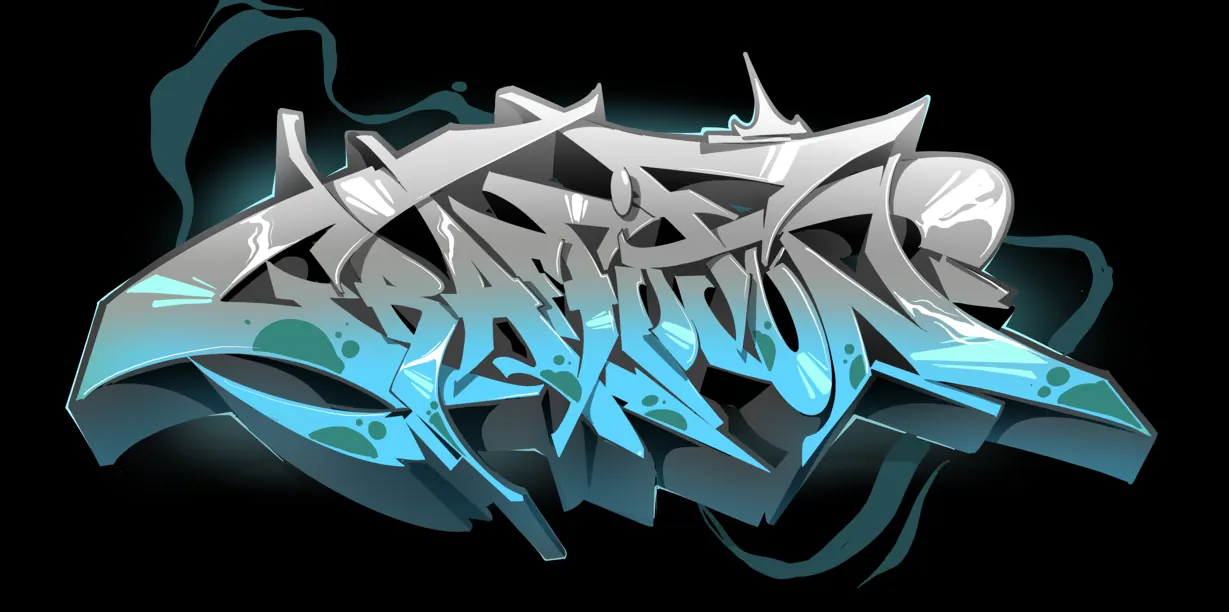
Just as a rapper develops a unique "flow" or a DJ develops a signature "scratch," a graffiti artist develops a "style." The evolution of lettering from simple tags to complex "Wildstyle" pieces mirrors the evolution of hip-hop lyrics from simple nursery-rhyme patterns to intricate multi-syllabic metaphors.
In the early days, "style wars" were common. Artists competed to have the most innovative letter structures, just as MCs competed in battles. This competitive spirit drove innovation. Key elements that link the two include:
- The Break: Just as DJs looped the "break" in a record, writers "broke" the alphabet, twisting and stretching letters until they were unrecognizable to the untrained eye.
- Sampling: Graffiti artists often "sampled" characters from cartoons or comic books, repurposing them into urban environments, much like producers sampled funk and soul records.
- Improvisation: Both forms rely heavily on the ability to improvise. A writer must adapt to the texture of a wall, just as an MC must adapt to a changing beat.
From the Streets to the Boardroom: Commercialization and Brand Activation
As hip-hop moved from the underground to the mainstream, graffiti followed suit. What was once seen as a nuisance became a highly sought-after aesthetic for global brands. Today, the "hip-hop look" is synonymous with urban cool, making it a powerful tool for brand activation.
Companies now recognize that the authenticity of graffiti can bridge the gap between a corporate identity and a younger, trend-conscious audience. This transition hasn't diluted the art; rather, it has provided professional artists with a platform to showcase their skills on a grander scale. At Graffitifun, we use our 20+ years of experience to help businesses harness this energy. Whether it’s through live art at a product launch or a corporate graffiti workshop, we translate the raw energy of hip-hop culture into a professional environment that fosters creativity and collaboration.
The Global Language of the Urban Landscape
Graffiti and hip-hop are perhaps the most successful cultural exports in history. From the favelas of Brazil to the suburbs of Tokyo, the spray can and the microphone have become tools for social commentary and personal identity. This global reach has created a "universal language."
When you join a workshop with our team, you are participating in a tradition that transcends borders. The techniques—caps, pressure control, fading, and outlining—are practiced by millions worldwide. This global community remains connected by the same hip-hop spirit of "doing it yourself." We see this daily in our work; graffiti doesn't care about your background, only your dedication to the craft. Our artists, coming from various backgrounds, demonstrate how the culture promotes inclusivity and mutual respect.
Practical Insights: Why the Connection Matters Today
Understanding the link between these two worlds is essential for anyone looking to engage with urban art authentically. For educators, it provides a way to connect with students through a medium they respect. For businesses, it offers a window into genuine street culture.
Key takeaways from the Graffiti-Hip-Hop connection:
- Authenticity is Currency: In both hip-hop and graffiti, being "real" is the highest honor.
- Collaboration Over Competition: While the roots are competitive, the modern movement thrives on collaboration—a core value in our workshops.
- Visual Communication: Graffiti is a way to communicate without saying a word, making it an ideal medium for team-building exercises.
- Cultural Preservation: By learning graffiti, you are helping to preserve a 50-year-old cultural heritage.
Conclusion: Painting the Future
The connection between graffiti and hip-hop is an unbreakable bond forged in the heat of 1970s New York. It is a relationship between sound and sight, rhythm and color. As the world’s leading graffiti workshop company, Graffitifun is dedicated to keeping this connection alive. With over 42 professional artists and decades of experience, we provide a bridge between the historical roots of the movement and the modern world.
Whether you are looking for a unique way to bond with your colleagues through a team building workshop, or you want to inspire students with graffiti workshops for schools, we offer an authentic experience that honors the true spirit of hip-hop.
Ready to pick up a spray can and find your flow? Contact Graffitifun today to book an experience that combines history, art, and the undeniable energy of hip-hop culture. Let’s create something legendary together.
Ready to Create Your Masterpiece?
Book your graffiti workshop today and discover the artist within! It's going to be AWESOME!