Top graffiti styles explained: from tags to wildstyle
Dive into the vibrant universe of graffiti! This guide unpacks the distinct styles that define street art, from the foundational tags to the elaborate and complex wildstyle. Understand the evolution and artistry behind each form.
Top Graffiti Styles Explained: From Basic Tags to Complex Wildstyle
Graffiti is far more than just "writing on walls." It is a sophisticated visual language, a global culture, and a highly technical art form that has evolved over decades. At Graffitifun, with over 20 years of experience and a collective of more than 42 professional artists, we have seen this subculture transform from underground rebellion into a respected medium for brand activation and professional art. Understanding the different styles of graffiti is essential for anyone looking to appreciate the craft or pick up a spray can for the first time. In this comprehensive guide, we break down the evolution of graffiti styles, explaining the techniques, terminology, and artistic progression from the humble tag to the mind-bending complexity of wildstyle.
The Foundation: Tags and the Art of the Signature
The "Tag" is the DNA of graffiti. It is the most basic form of the craft, yet paradoxically, one of the hardest to master. A tag is a stylized signature, usually executed quickly with a marker or a spray can. While passersby might see it as simple scribble, seasoned artists recognize the flow, "handstyle," and letter lean that define a writer’s identity.
In our graffiti workshops, we always start with the tag because it teaches the fundamental principles of letter structure. A good tag isn't about complexity; it’s about rhythm and muscle memory. The goal is to create a unique aesthetic using a single line or a cohesive set of characters.
Key elements of a professional tag include:
- Flow: The natural movement and connection between letters.
- Consistency: Maintaining the same height, width, and lean throughout the signature.
- Placement: Choosing a "spot" that maximizes visibility or complements the architecture.
- Speed: The ability to execute the mark fluidly without hesitation.
Mastering the tag is a rite of passage. It is the artist's calling card and the basis for every other style that follows. Without a solid handstyle, an artist’s more complex pieces will often lack the underlying structural integrity required for high-level work.
Throw-ups: The Bridge Between Speed and Scale
Moving up from the tag, we encounter the "Throw-up" (or "Throwie"). This style emerged as a way for artists to cover more surface area in a short amount of time. Usually consisting of two or three bubble-style letters, a throw-up typically uses two colors: one for the "fill-in" and one for the "outline."
The throw-up is defined by its rounded, soft edges—hence the common term "bubble letters." It is designed for maximum impact with minimum effort. In the world of street art, the throw-up is about volume and repetition. However, don't let the simplicity fool you. Designing a balanced throw-up requires a deep understanding of negative space and letter distortion.
At Graffitifun, we often use throw-up techniques in our team building workshops because they are approachable for beginners. They allow participants to feel the power of the spray can and see immediate, large-scale results. A successful throw-up should look effortless, with clean lines and no "overspray" or drips, demonstrating the artist's control over the pressure of the can.
Blockbuster and Straight Letters: Clarity and Impact
When the goal is readability and massive scale, artists turn to "Blockbusters." This style is characterized by large, square, blocky letters that can be seen from great distances. Historically, blockbusters were used to cover large areas of a wall quickly, often using paint rollers instead of just spray cans.
"Straight Letters" are a more refined version of this. While they remain highly readable, they incorporate more style, sharper angles, and perhaps some basic 3D effects or shadows. This is the style you will most likely see on legal walls or commissioned murals. It balances the "street" aesthetic with a professional level of craftsmanship that appeals to the general public.
Why the Blockbuster style matters:
- Visibility: It is designed to be read from a distance, making it perfect for highway embankments or rooftops.
- Professionalism: It serves as the foundation for many commercial murals and graffiti workshops for schools.
- Structural Integrity: It forces the artist to focus on the "bones" of the alphabet before adding decorative flares.
For corporate clients, straight letters are often the preferred choice for logos, as they maintain brand identity while adding an edgy, urban flair.
Piece (Masterpiece): The Pinnacle of Techinque
Short for "Masterpiece," a "Piece" is a complex, time-consuming work of art that involves multiple colors, highlights, shadows, and intricate backgrounds. Unlike tags or throw-ups, a piece is rarely done in a hurry. It is a calculated display of an artist's technical prowess, often taking hours or even days to complete.
A piece typically incorporates:
- 3D Effects: Giving the letters depth and making them "pop" off the wall.
- Color Transitions: Smooth gradients and blends that show off the artist's "can control."
- Characters: Adding illustrated figures or mascots to complement the lettering.
- Force Fields: An outer glow or outline that separates the piece from the background.
In our two decades of experience, we have found that "piecing" is where the true storytelling happens. It allows our 42+ professional artists to express their unique styles, whether that’s through sharp, mechanical shapes or organic, flowing forms. For those attending our advanced workshops, learning to "piece" is the ultimate goal, turning a blank wall into a vibrant, multi-layered narrative.
Wildstyle: The Abstract Architecture of Letters
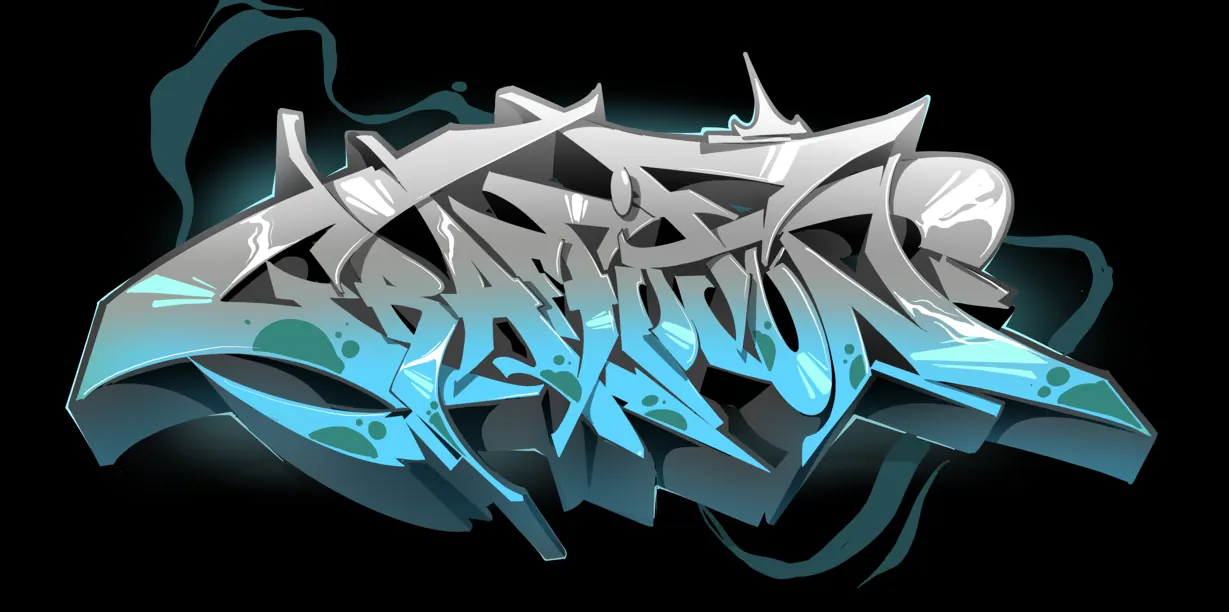
Wildstyle is perhaps the most famous—and most misunderstood—form of graffiti. It is an incredibly complex style where letters are stretched, twisted, and intertwined with arrows, spikes, and other decorative elements to the point where they become nearly unrecognizable to the untrained eye.
The "Wild" in Wildstyle refers to the untamed nature of the letters. This style is not about readability; it is about the internal logic of the design and the skill of the artist. It is the "jazz" of the graffiti world—improvisational yet deeply rooted in technical theory. To create a successful wildstyle piece, an artist must understand how to break the rules of typography without losing the balance of the composition.
Key features of Wildstyle:
- Interlocking Parts: Letters that physically weave through one another.
- Arrows and Directional Lines: Used to create a sense of movement and energy.
- Complex Color Schemes: Often using dozens of shades to create a "camouflage" effect.
- High Technical Barrier: It takes years of practice to master the spatial awareness required for this style.
At Graffitifun, our professional artists specialize in translating these complex visuals into accessible art, often showcasing wildstyle techniques during live demonstrations at events to mesmerize audiences.
Stencil and Street Art: The Modern Evolution
While traditional graffiti is letter-centric, the broader "Street Art" movement has introduced styles like stenciling, wheatpasting, and muralism. Stencil art—popularized by artists like Blek le Rat and later Banksy—allows for high-detail imagery and social commentary that can be replicated quickly.
Modern street art often blends traditional graffiti techniques with fine art sensibilities. This fusion has made the medium incredibly popular for brand activation and urban regeneration projects. It bridges the gap between the raw energy of the street and the polished finish of a gallery.
In our workshops, we explore how these different styles can coexist. Whether it’s using a stencil for a precise logo or using freehand spray techniques for a background, the modern artist has a massive toolkit at their disposal. The evolution from a simple marker tag to a multi-story mural represents the incredible journey of this art form over the last 50 years.
Conclusion: Finding Your Style with Graffitifun
From the rhythmic simplicity of a tag to the architectural complexity of wildstyle, graffiti is a diverse and meritocratic art form. Every style has its place, and every artist starts at the beginning. Understanding these styles allows you to see the city through a different lens—appreciating the skill, history, and dedication behind every stroke of paint.
With over 20 years of experience and a team of 42+ professional artists, Graffitifun is dedicated to sharing this passion with the world. Whether you are looking for a unique team building workshop, an educational program for schools, or a high-impact brand activation, we provide the expertise and the environment to help you discover your own creative voice.
Ready to pick up a can and start your creative journey? Book a workshop with Graffitifun today and learn the secrets of the street from the world's leading graffiti experts!
Ready to Create Your Masterpiece?
Book your graffiti workshop today and discover the artist within! It's going to be AWESOME!