Graffiti Styles Evolution: From Tags to Wildstyle Masterpieces
Complete guide to graffiti style evolution: tags, throw-ups, blockbusters, wildstyle, 3D, and contemporary styles. History, techniques, and characteristics.
Graffiti styles have evolved dramatically since the first tags appeared on Philadelphia walls in the late 1960s. What began as simple handwritten signatures has developed into an extraordinarily complex visual language with dozens of distinct styles, each with its own rules, techniques, and cultural significance. Understanding this evolution is essential for any graffiti artist — because mastering style means understanding where it came from and where it is going.
This guide traces the complete evolution of graffiti styles, from the simplest tag to the most complex wildstyle compositions. Each style is examined in terms of its characteristics, historical context, technical requirements, and place in graffiti culture. Whether you are a beginner learning to recognise styles or an experienced artist deepening your knowledge, this resource provides comprehensive reference material.
The style hierarchy
Graffiti styles exist on a spectrum of complexity and effort. Understanding this hierarchy is fundamental to graffiti education:
| Style | Complexity | Time to execute | Colours | Skill level |
|---|---|---|---|---|
| Tag | Low | Seconds | 1 | Beginner |
| Throw-up | Low-Medium | 1–5 minutes | 2 | Beginner-Intermediate |
| Blockbuster | Medium | 10–30 minutes | 2–3 | Intermediate |
| Straight letter | Medium | 30–90 minutes | 3–5 | Intermediate |
| Semi-wildstyle | High | 2–4 hours | 4–8 | Advanced |
| Wildstyle | Very high | 4–8+ hours | 5–10+ | Expert |
| 3D / photorealistic | Very high | 4–10+ hours | 8–15+ | Expert |
Tags: the foundation
The tag is the most fundamental element of graffiti culture — a writer's stylised signature, executed quickly in a single colour. Every graffiti artist's journey begins and ends with the tag.
Characteristics of a good tag
- Flow — letters connect smoothly without awkward breaks
- Consistency — the tag looks the same every time it is written
- Legibility — it can be read (at least by those familiar with graffiti lettering)
- Speed — executable in 2–5 seconds
- Personality — it has distinctive character that makes it recognisable
Throw-ups: speed and coverage
Throw-ups evolved as a middle ground between tags and full pieces. Typically using two colours (outline + fill), they feature rounded, bubble-style letters designed for rapid execution.
Key characteristics
- Bubble or rounded letter forms
- Two colours: one for outline, one for fill
- Execution time: 1–5 minutes
- Designed for quantity and coverage
- Simple enough for speed, stylised enough for impact
Blockbusters: maximum coverage
Blockbusters are large, simple, blocky letters designed to cover maximum wall space with minimum effort. Often painted with paint rollers rather than spray cans, they are the strategic choice for claiming space.
Straight letters: the workhorses
Straight letters are clean, readable letter styles without extreme stylistic distortion. They form the foundation of most graffiti pieces and are the style most commonly taught in graffiti workshops.
Sub-styles
- Simple letters — clean block forms, easy to read, focus on colour and fill quality
- Bar letters — constructed from consistent-width bars, very structured
- Dynamic letters — straight letters with added movement: slight leans, curves, or serifs
Wildstyle: the pinnacle
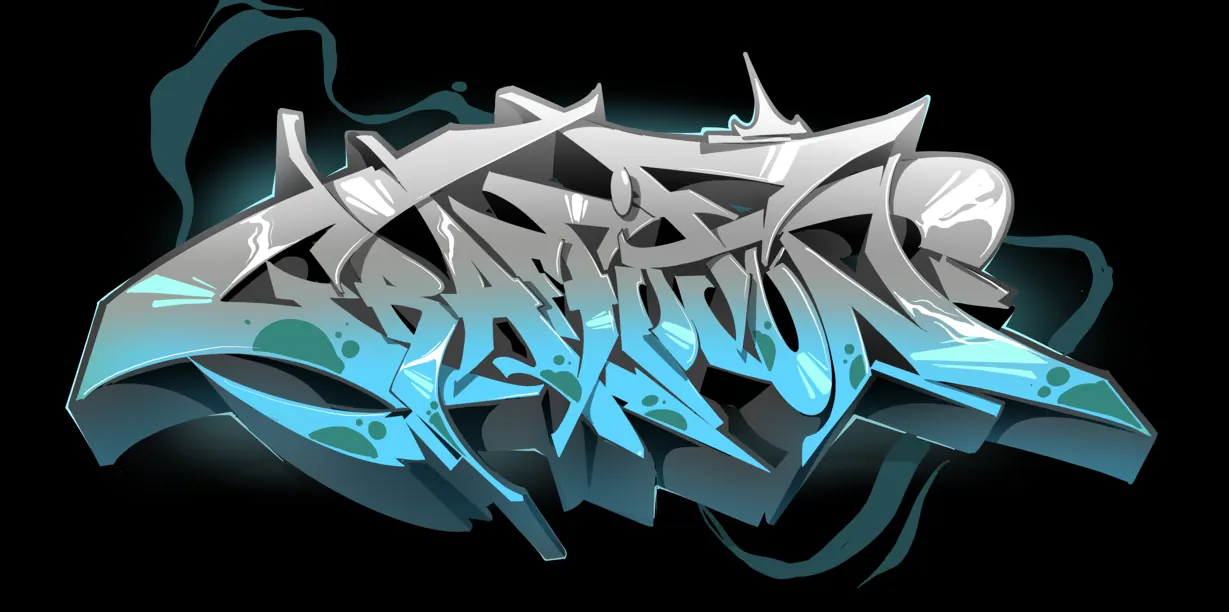
Wildstyle represents the highest level of complexity in graffiti lettering. Letters interlock, overlap, and twist into elaborate compositions filled with arrows, connections, decorations, and structural elements. Reading wildstyle is a skill in itself — many wildstyle pieces are intentionally difficult to decipher by outsiders.
Wildstyle elements
| Element | Function | Visual effect |
|---|---|---|
| Interlocking letters | Letters physically overlap and connect | Unity, complexity, depth |
| Arrows | Directional elements extending from letters | Energy, movement, aggression |
| Connections | Bars linking separate letters | Structural cohesion |
| Bits | Small decorative shapes (circles, stars, dots) | Detail, density, refinement |
| Extensions | Exaggerated serifs and strokes | Dynamic movement, expansion |
| Negative space | Deliberate empty areas within the composition | Readability, breathing room |
3D and photorealistic styles
3D lettering
3D graffiti creates the illusion that letters are three-dimensional objects with volume, weight, and position in space. This requires understanding perspective, light, and colour layering for shadows and highlights.
Photorealistic graffiti
Photorealistic graffiti reproduces photographs or realistic imagery using spray paint. This requires extraordinary spray control and an understanding of colour theory, light, and human anatomy (for portraits). It often combines traditional painting techniques with spray paint capabilities.
Contemporary style trends
- Abstract graffiti — non-letter-based compositions exploring colour, form, and energy without text
- Calligraffiti — fusion of Arabic or Asian calligraphy with Western graffiti letter forms
- Digital influence — pixel art, glitch aesthetics, and digital design elements translated to physical walls
- Eco-graffiti — using natural materials (moss, mud, chalk) for environmentally conscious art
- Muralism — large-scale, figurative art that combines graffiti techniques with illustration and fine art traditions
Learning style progression
Recommended learning path
- Month 1–3: Master your tag. Write it thousands of times until it is automatic
- Month 3–6: Develop a throw-up. Clean bubble letters, fast execution
- Month 6–12: Build straight letter pieces. Focus on structure, colour, and clean outlines
- Year 1–2: Begin semi-wildstyle. Add connections, arrows, and more complex compositions
- Year 2+: Develop wildstyle and personal style identity
- Ongoing: Explore 3D, characters, and cross-style experimentation
Study the masters. Collect reference images of styles you admire and analyse them: How do the letters connect? Where are the arrows placed? What makes it readable despite the complexity? Understanding existing work accelerates your own development. Visit legal walls, browse graffiti archives, and attend graffiti workshops to learn from experienced artists.
Frequently asked questions
What is the easiest graffiti style to learn?
Tags are the simplest to start with — they require only one colour, no caps, and can be practised on paper. Throw-ups are the easiest spray paint style, using simple bubble letters with just two colours. Straight letters are the entry point for full pieces, offering clean, readable results without the complexity of wildstyle. Start simple and add complexity gradually.
What is wildstyle graffiti?
Wildstyle is the most complex form of graffiti lettering, featuring interlocking letters, arrows, connections, and decorative elements woven into elaborate compositions. The letters twist, overlap, and connect in ways that make them challenging to read for non-graffiti audiences. Wildstyle pieces can take 4–8+ hours to complete and represent the highest level of technical skill in letter-based graffiti.
How long does it take to develop a personal graffiti style?
Developing a recognisable personal style typically takes 2–5 years of consistent practice. The first year focuses on learning fundamentals and copying/studying existing styles. The second year involves experimentation and finding preferences. By year 3–5, most dedicated artists have developed a distinctive personal approach that is recognisable to others in the community.
What is the most impressive graffiti style?
In graffiti culture, impressiveness is judged by different criteria: clean tags demonstrate mastery of the fundamentals, massive throw-ups show coverage commitment, photorealistic pieces showcase technical skill, and intricate wildstyle demonstrates structural creativity. Each style commands respect when executed at a high level. The "most impressive" is subjective and context-dependent.
Can I learn graffiti styles in a workshop?
Yes. Professional graffiti workshops teach foundational lettering styles (straight letters, bubble letters) and spray control techniques. A 2–3 hour workshop provides the basics to start practising independently. For deeper style development, extended workshops or masterclasses focused on advanced techniques like wildstyle and 3D are available. See our workshop options.
Start your style journey
Understanding graffiti styles gives you the vocabulary and vision to develop your own artistic identity. Start with the fundamentals, study the masters, and practice consistently.
Keep reading
Ready to Create Your Masterpiece?
Book your graffiti workshop today and discover the artist within! It's going to be AWESOME!