Abstract graffiti
Discover the world of abstract graffiti. Learn about its origins, techniques, and why it's the perfect style for beginners and modern urban art workshops.
Abstract graffiti is a powerful and liberating evolution within the urban art world, moving beyond the traditional constraints of alphabet-based designs. Instead of focusing on legible names or "tags," this style emphasises the use of colour, shape, texture, and flow to create visual impact. It represents a bridge between the raw energy of the streets and the sophisticated world of contemporary fine art. Whether you are looking at a massive geometric mural or an expressive explosion of drips and splatters, abstract graffiti invites the viewer to experience art through emotion rather than literacy. In this guide, we explore how professional graffiti artists have transitioned from letters to pure form and why this style is currently the most popular choice for modern workshops and urban transformations. 🎨
Defining the essence of abstract graffiti
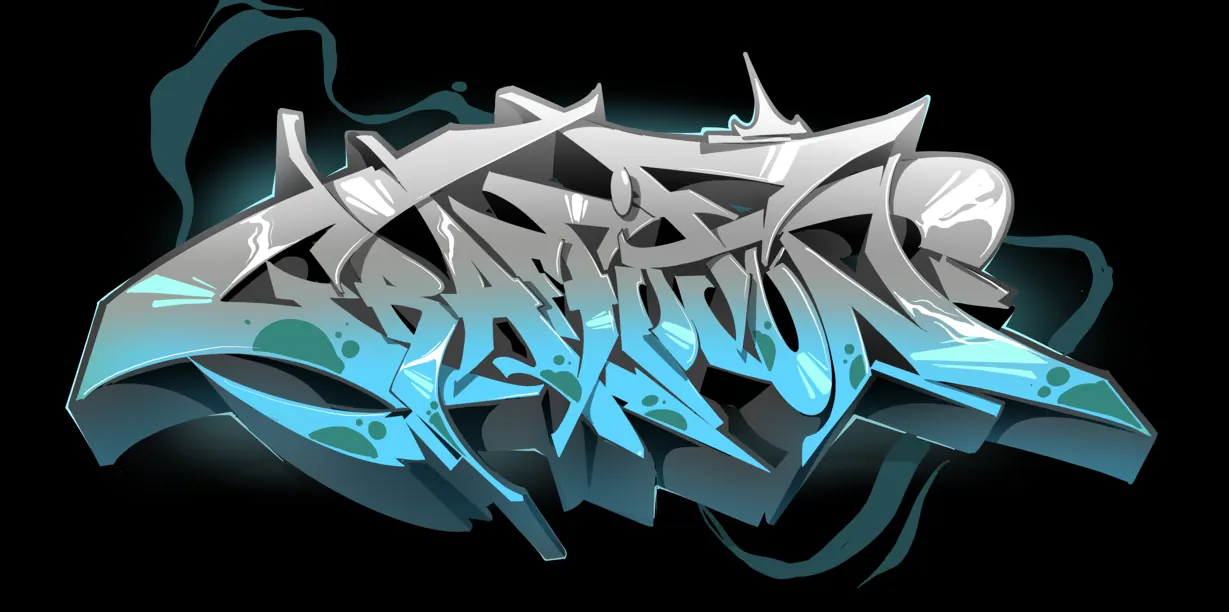
Abstract graffiti, often referred to in the urban art scene as "graffuturism," represents a departure from the rigid structures of traditional letter-based art. While classic graffiti focuses on the stylisation of an artist’s name through a graffiti tag or a complex wildstyle, abstract graffiti prioritises form, colour, and texture above legibility. In this style, the spray can becomes a tool for pure expression, much like a brush in the hand of a Fine Art painter.
For professional artists, this movement represents the evolution of the medium. It’s not just about what is written, but how the space is manipulated. You will often see geometric shapes, fluid lines, and textured layers that create a sense of depth and movement. By stripping away the requirement for letters, the artist invites the viewer to interpret the work through their own emotions and perspectives. 🎨
The origins and evolution of the abstract movement
The roots of abstract graffiti are deeply intertwined with the development of the "piece" (see our guide on graffiti pieces). In the 1970s and 80s, writers in New York began pushing the boundaries of letter shapes until they became nearly unrecognisable. This technical evolution, known as wildstyle, was the first step toward abstraction. However, the true "abstract" movement gained momentum in the late 1990s and early 2000s.
Artists began to incorporate influences from Futurism, Constructivism, and Abstract Expressionism. They moved away from the "all-city" mentality of traditional tagging and toward a gallery-ready aesthetic. This transition allowed graffiti to enter high-end art spaces while maintaining its raw, energetic soul found in the streets. Professional graffiti artists today use these historical foundations to create massive murals that transform urban environments into open-air museums.
From letters to pure form
In the traditional sense, a writer would start with a blackbook sketch of their name. In abstract work, the sketch might consist of mathematical grids, organic splashes, or rhythmic patterns. The goal is no longer to make the name "pop" but to make the composition harmonise with the surrounding architecture. This shift has opened the door for many who previously felt restricted by the technical rules of letter construction.
Visual characteristics and techniques
What makes a piece of art "abstract graffiti" rather than just an abstract painting? The answer lies in the tools and the energy. The use of specialized cap types to achieve varying line widths, the inclusion of intentional drips, and the high-speed execution characteristic of street art are all hallmarks of this style.
- Geometric abstraction: Sharp angles, grids, and 3D shapes that challenge the viewer’s perception of the wall's surface.
- Organic abstraction: Flowing, liquid-like forms that mimic nature or biological structures.
- Layering and transparency: Using low-pressure cans to create "ghost" layers that give the work an ethereal quality.
- Texture manipulation: Using scrapers, sponges, or even fingers to move the paint while it's still wet.
Abstract graffiti in workshops and education
One of the most exciting developments in urban art education is the rise of abstract workshops. For many beginners, the pressure of drawing perfect letters can be intimidating. Abstract graffiti removes this barrier, making it an incredibly accessible style for all skill levels. 🚀
Why it’s perfect for team building and groups
When we host workshops, abstract styles are often the highlight for corporate groups or large school sets. Because there is no "wrong" way to create an abstract shape, participants feel a sense of creative freedom immediately. It encourages collaboration—one person might lay down a geometric background, while another adds fluid splashes on top. The result is a collective masterpiece that reflects the energy of the whole group.
Skill level and time investment
While abstract graffiti is "easy" to start, it is incredibly difficult to master. A simple abstract background for a fill-in might take 30 minutes, but a high-level abstract mural can take days of planning and execution.
- Beginner level: 1-2 hours to understand the flow and basic can control.
- Intermediate level: 5-10 hours to master layering and color theory.
- Advanced level: Years of practice to develop a unique visual language.
Modern adaptations: Graffuturism and beyond
Today, the abstract scene is more vibrant than ever. We see artists combining digital design techniques with traditional spray-painting. Some use projectors to map complex geometric grids onto 10-story buildings, while others prefer a "freestyle" approach, letting the architecture of the building dictate the flow of the paint. This versatility is why abstract graffiti has become a preferred choice for modern office interiors and luxury branding projects.
Choosing the right materials for abstract work
To succeed in this style, you need a diverse toolkit. Experienced artists don't just stick to standard nozzles. They experiment.
- Needle caps: For thin, "sketchy" lines that add a raw feel.
- Fat caps: For massive bursts of colour and blending effects.
- Low-pressure cans: Better for detailed work and subtle gradients.
- Stencils: Sometimes used to repetitive geometric patterns (see stencil graffiti).
Conclusion: The future is abstract
Abstract graffiti represents the ultimate freedom in the urban art world. It honours the history of the spray can while looking firmly toward the future of fine art. Whether you are a seasoned writer looking to break out of letter-based constraints or a beginner wanting to experience the thrill of the aerosol for the first time, abstraction offers an infinite playground for the imagination.
By focusing on the physical act of painting and the emotional resonance of colour, abstract graffiti ensures that the "writing on the wall" will continue to evolve and inspire for generations to come. 🌟
Expert attribution
This guide was compiled by the expert team at Graffitifun. With years of hands-on experience and a global network of professional graffiti artists, we have facilitated thousands of workshops that bridge the gap between street culture and contemporary art education. Our artists specialise in translating complex urban styles into accessible, professional, and fun learning experiences for audiences of all ages and backgrounds.
Frequently asked questions
Keep reading
Ready to Create Your Masterpiece?
Book your graffiti workshop today and discover the artist within! It's going to be AWESOME!