Graffiti piece
Learn about the graffiti piece: the ultimate masterpiece of urban art. Explore history, visual features, and how pieces are used in workshops.
In the vibrant lexicon of urban art, the graffiti piece (short for "masterpiece") stands as the most sophisticated and technically demanding form of expression. Unlike the quick signatures seen on city corners, a piece is a large-scale, multi-coloured work of art that showcases an artist's signature style, technical "can control," and creative vision. Whether you are an aspiring artist, a curious observer, or a business looking for creative innovation training, understanding the anatomy of a piece is essential for appreciating the depth of graffiti culture. In this guide, we explore the origins, characteristics, and practical applications of the piece, drawing on years of professional experience in the global graffiti scene. 🎨
What is a graffiti piece?
In the world of urban art, the term "piece" is a short-form version of "masterpiece." While the word might conjure images of museum canvases, in the graffiti subculture, it refers to a large, complex, and highly laboured wall painting. A piece is significantly more advanced than a simple graffiti tag or a throw-up. It represents the pinnacle of a writer's skill, involving intricate lettering, multiple colours, and sophisticated artistic techniques.
A true piece is generally characterized by its scale and the time required to complete it. Unlike "bombing" (which prioritises speed and quantity), "piecing" is about quality and style. These works are typically painted in legal spots, Halls of Fame, or secluded areas where an artist can spend several hours—or even days—perfecting every detail. 🎨
Historical context: The evolution of the masterpiece
The concept of the "piece" emerged in the early 1970s in New York City. As the subway graffiti scene became increasingly competitive, artists sought ways to stand out beyond the standard single-colour tags. Writers began to thicken their letters and add "outlines," eventually leading to the development of the "Top-to-Bottom" (T-to-B) and "End-to-End" pieces on train cars.
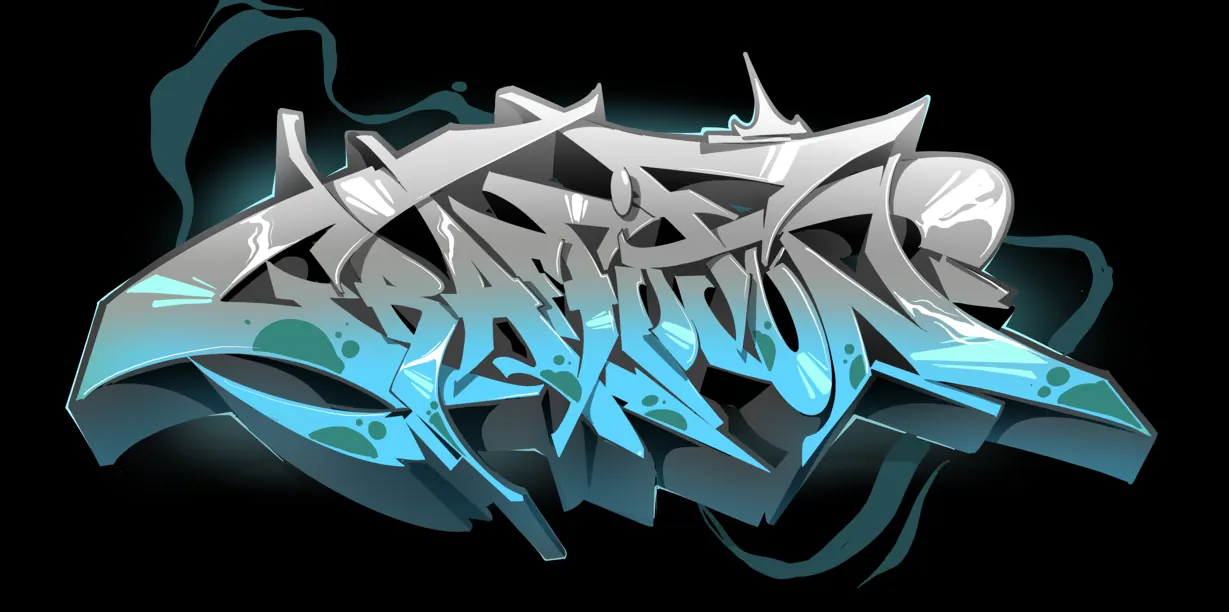
Early pioneers like Super Kool 223 are credited with using the first industrial spray nozzles (fat caps) to fill in large areas of colour, making the first pieces possible. As the culture evolved, the "piece" became the standard for technical excellence. This era saw the birth of complex styles like wildstyle graffiti, where letters become so interconnected and stylized they are nearly illegible to the untrained eye. Today, the piece has migrated from the sides of subway cars to dedicated mural spaces and gallery walls, cementing its place in the global graffiti scene.
Visual characteristics of a piece
To identify a piece, one must look for several defining elements that separate it from more basic forms of aerosol art:
1. Complex letter structure
The foundation of any piece is the lettering. Unlike tags, which are calligraphic, pieces use "block" or "bubble" structures that are built out into three-dimensional shapes. These letters often feature "extensions"—arrows, serifs, and flourishes that interconnect the characters.
2. Colour fills and blending
A piece is rarely monochromatic. It usually features a "fill-in" consisting of gradients, patterns (like polka dots or stars), or complex shading techniques. Professional graffiti artists often use transition colours to create a smooth 3D effect.
3. The outline and 3D
After the fill-in comes the "power line" or "outline," which defines the shape of the letters. To add depth, artists add a "3D" or "drop shadow" element, making the letters appear as if they are popping off the wall.
4. Background and "Aura"
A finished piece often includes a "background" (scenery or abstract shapes behind the letters) and an "aura" or "outer glow" (a final line of colour surrounding the entire work) to separate it from the wall's texture.
Practical workshop application: Creating your first piece
At Graffitifun, we believe that everyone has the potential to create a masterpiece. While professional writers spend years honing their craft, our workshops break down the "piece" into manageable steps for beginners. 🖌️
Step 1: The Sketch (The Blueprint)
Every great piece starts on paper. In our sessions, we teach participants how to construct "bars"—the geometric building blocks of letters. This ensures that even as the style becomes complex, the underlying structure remains solid.
Step 2: Scaling Up
Moving from paper to a large canvas or wall requires an understanding of proportion. We use "sketching lines" (light-coloured paint) to map out the piece on the wall before committing to the final shapes.
Step 3: Can Control
The technical heart of piecing is "can control." This involves manipulating the distance between the spray can and the surface, as well as the pressure applied to the nozzle. Our professional instructors demonstrate how to achieve clean lines and smooth fades, which are essential for a high-quality piece.
Cultural relevance: More than just paint
In the graffiti community, "piecing" is a show of respect. While tags claim territory, pieces claim talent. A writer who can produce high-quality pieces is often called a "King" or "Queen" of a particular line or area. It demonstrates discipline, patience, and an understanding of colour theory and composition.
Furthermore, pieces are a vital part of urban art education. They transform neglected spaces into outdoor galleries, often reflecting the identity and energy of the local neighbourhood. For many, the transition from tagging to piecing marks a shift from rebellious expression to a more focused, artistic discipline, often leading to careers in graphic design, fine art, or professional muralism.
Difficulty level: Advanced
On a scale of 1 to 10, a professional-grade piece is a 9 or 10. It requires mastery of:
- Anatomy of letters: Understanding how to bend letters without breaking them.
- Colour theory: Choosing complementary and contrasting colours for maximum impact.
- Environmental factors: Dealing with wind, surface texture, and paint drying times.
- Physical stamina: Large pieces can take 5 to 10 hours of physical labor to complete.
Common misconceptions
"It's just vandalism"
While the origins of graffiti are rooted in uncommissioned work, the modern "piece" is most frequently found on legal walls or commissioned as mural art. The level of skill involved has led many pieces to be recognized as legitimate fine art.
"You need expensive paint to make a piece"
While professional aerosol brands help, a piece is defined by the artist’s skill. A master can create a stunning piece with hardware-store paint, whereas a novice will still struggle even with the best equipment. It’s about the "hand" behind the can.
"Pieces are the same as murals"
While they share similarities, a "piece" is specifically centered around the artist's name or "moniker" in stylized lettering. A mural may be purely illustrative or figurative without any lettering at all.
Business and Team Building Benefits
Interestingly, the process of creating a collective piece has become a major trend in corporate team building. When a team works on a single large-scale piece, they must communicate about colour coordination, overlapping sections, and the overall "flow" of the work. This mirrors real-world project management and fosters team cohesion in a high-energy, creative environment. 🚀
Summary
A graffiti piece is the ultimate expression of the writer’s craft. It is a complex, multi-layered work of art that demands respect through its technical difficulty and aesthetic beauty. Whether it’s a wildstyle explosion of geometry or a clean, bold "blockbuster," the piece remains the heartbeat of graffiti culture, bridging the gap between the streets and the gallery.
Expert attribution
This article was authored by the Graffitifun editorial team, drawing on over a decade of hands-on experience in the global urban art scene. Our team consists of professional graffiti artists who have spent thousands of hours mastering the art of the "piece" on various surfaces across the world. At Graffitifun, we are dedicated to preserving the authentic techniques of aerosol art while making them accessible and safe for enthusiasts of all ages through our professional workshops and educational resources.
Frequently asked questions
Keep reading
Ready to Create Your Masterpiece?
Book your graffiti workshop today and discover the artist within! It's going to be AWESOME!