Wildstyle
Master the art of wildstyle graffiti. Learn about interlocking letters, 3D depth, and the history of this complex style from professional artists.
Wildstyle is perhaps the most iconic and visually arresting form of graffiti art. Known for its intricate, overlapping letters and aggressive geometric shapes, it represents the technical peak of the craft. 🌀 Emerging from the competitive streets of New York in the late 1970s, wildstyle was designed to be "unreadable" to the average passerby, acting as a secret code among artists. At Graffitifun, our professional artists have spent decades mastering these complex structures. In this guide, we will explore the origins, anatomy, and mastery of wildstyle, providing insights into why this style remains the gold standard for urban artists worldwide.
What is wildstyle graffiti?
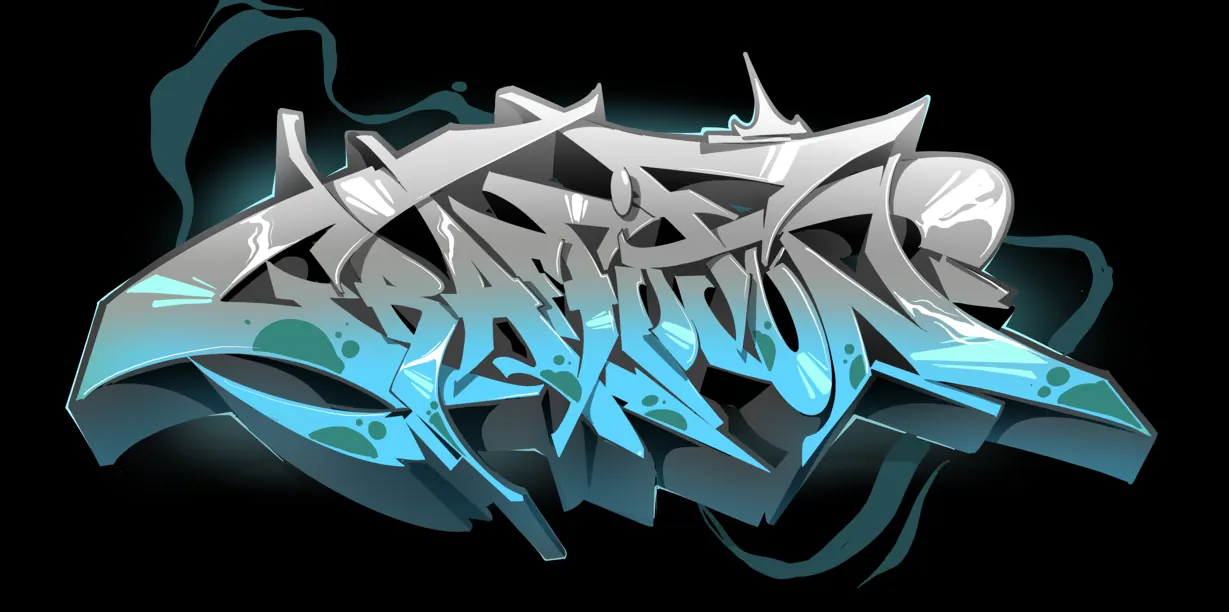
Wildstyle is widely considered the pinnacle of typographic expression within the graffiti subculture. It is a complex, intricate, and highly stylised form of lettering that often renders the underlying word illegible to the untrained eye. Characterised by interlocking letters, arrows, spikes, and various decorative elements, wildstyle is not just about writing a name; it is about the architectural construction of a visual identity. 🎨
In a standard graffiti piece, the letters might be bold and readable, but in wildstyle, the traditional structure of the alphabet is stretched, twisted, and mechanicalized. This style demands an advanced understanding of letterform, flow, and spatial awareness. For many artists within the community, mastering wildstyle is a lifelong pursuit that signifies a transition from a beginner to an expert practitioner.
The visual anatomy of wildstyle
Interlocking letters and connections
The core of wildstyle lies in how the letters connect. Instead of standing side-by-side, letters in a wildstyle piece frequently overlap or "lock" into one another. A bar from the letter 'K' might extend and pierce through the 'O' next to it, creating a unified structure rather than a string of individual characters. These connections are often reinforced with specialized fill-ins that use colour transitions to guide the eye through the maze involving complex spray paint blending.
Decorative elements: arrows, spikes, and bits
To the uninitiated, the extra "bits" on a wildstyle piece might look like random noise. However, every arrow and spike serves a purpose in the composition's "flow." Arrows are used to direct the viewer's eye or to balance the weight of a letter. Spikes can add a sense of aggression or mechanical precision. Professional artists often spend hours in their blackbook perfecting these extensions to ensure they don't look cluttered but instead enhance the overall silhouette of the work.
3D depth and shadows
Because the letter structures are so complex, adding depth is essential to prevent the piece from looking flat. Advanced 3D depth creation is a staple of the style. This can include "drop shadows," "vanishing point 3D," or "isomeric 3D," which helps the interlocking letters pop off the wall. 🖌️
Origins and the 1980s revolution
Wildstyle originated in the South Bronx and Upper Manhattan during the late 1970s and early 1980s. As the "Style Wars" intensified, artists sought ways to make their names stand out in a sea of tags and throw-ups. The goal was "encoding"—creating a style so advanced that only other writers could read it, effectively creating a private language on public walls.
The term was immortalised by the 1983 film Wild Style, which brought the culture of hip-hop, breakdancing, and graffiti to a global audience. Early pioneers pushed the boundaries of what a letter could be, moving away from soft "bubble" shapes toward sharp, aggressive, and mechanical "mechanical" styles that mirrored the grit and energy of New York City at the time.
Modern adaptations and digital evolution
Today, wildstyle has evolved into several sub-genres. Some artists focus on "Mechanical Wildstyle," which looks like blueprints for futuristic machinery. Others lean into "Organic Wildstyle," where letters look like growing vines or biological structures. With the advent of digital design tools, many artists now use tablets to plan their compositions, allowing for even more precise geometry before they ever touch a spray can to a wall.
Despite these modern tools, the "golden rule" remains the same: the structure must be solid. You cannot hide bad letter structure behind fancy arrows. A true master can strip away the 3D and the highlights and still show a perfectly balanced skeleton of letters.
Skill level required and time investment
Wildstyle is an advanced or expert-level style. It is rarely recommended for absolute beginners because it requires a foundation in:
- Can Control: Maintaining sharp edges and clean lines is difficult when letters are small and crowded.
- Letter Theory: Understanding the "bars" of a letter so they can be manipulated without losing their essence.
- Patience: A full-scale wildstyle burner can take anywhere from 6 to 12 hours (or multiple days) to complete.
For those looking to learn, the process involves hundreds of hours of sketching. It is a slow burn, but the reward is a unique visual signature that is unmistakably yours.
Wildstyle in a workshop setting
At Graffitifun, we often get asked if beginners can paint wildstyle during a two-hour session. While we love the enthusiasm, we usually guide beginners toward "semi-wildstyle" or "complex pieces." 🚀
Why it’s challenging for workshops:
In a standard workshop, the focus is on learning can control mastery and basic letter structures. Because wildstyle is so time-consuming, attempting a full piece during a first-time experience can often lead to frustration. However, for advanced workshops or team-building events where participants have some creative background, we introduce wildstyle concepts through collaborative murals. Our professional artists sketch the "skeleton" of a wildstyle piece, and guests help with the filling, shading, and detail work under expert guidance.
Audience fit
- Best for: Experienced artists, enthusiasts, and long-term students.
- Not ideal for: Very young children or quick 1-hour "taster" sessions.
- Workshop recommendation: Use wildstyle as a demonstration piece by the instructor to inspire participants while they work on more accessible styles.
Expert tip: Mastering the flow
The most common mistake when starting wildstyle is adding too many arrows too early. Our professional artists always suggest starting with a "basic" block letter. Once the spacing (kerning) is perfect, you can then begin to "break" the letters or add extensions. If the base isn't strong, the whole piece will look "toppled." Focus on the flow—the imaginary line that connects the top and bottom of all your letters—to ensure the piece feels like a single, moving organism.
Conclusion
Wildstyle remains the "final boss" of graffiti art. It represents a perfect marriage between technical skill and raw creative expression. Whether you are observing it on a legal wall or attempting to sketch your first interlocking letters in a blackbook, wildstyle demands respect for its history and its complexity. By understanding its origins and the rules of its construction, you gain a deeper appreciation for the urban landscape and the incredible talent required to transform a name into a masterpiece. ⚡
This guide was authored by the Graffitifun editorial team, drawing on decades of collective experience from professional graffiti artists who have taught thousands of students the art of the spray can. Our workshops prioritize safety, technique, and the preservation of urban art culture.
Frequently asked questions
Keep reading
Ready to Create Your Masterpiece?
Book your graffiti workshop today and discover the artist within! It's going to be AWESOME!