Graffiti tag
Learn everything about the graffiti tag: historical origins, technical elements of handstyle, and its role in modern urban art education and workshops.
The graffiti tag is the foundational element of all urban art. More than just a simple signature, it represents an artist's identity, technical skill, and "flow" distilled into a single, rapid motion. Whether you are walking through the streets of a major city or participating in a professional urban art workshop, the tag is the first thing you will encounter. It is a form of modern calligraphy that requires years of dedication to master. In this comprehensive guide, we explore the deep cultural roots of the tag, the visual principles that define a "good" handstyle, and how this basic mark serves as the building block for the world's most complex street art masterpieces. 🎨
Defining the graffiti tag: the core of urban calligraphy
In the vast world of urban art, the graffiti tag is the most fundamental and ubiquitous element. At its core, a tag is a stylised signature or pseudonym of a graffiti artist, known within the culture as a "writer". Unlike large-scale murals or complex pieces, the tag is focused on the raw essence of lettering, flow, and speed. It serves as a digital footprint in the physical world, asserting presence and identity within the urban landscape. 🖊️
While outsiders often view tags as mere scribbles, practitioners see them as a complex form of calligraphy. Every loop, lean, and flourish is intentional. A tag is not just a name; it is a manifestation of an artist's personal brand and technical proficiency. In our professional workshops, we often describe the tag as the "skeleton" of all graffiti. Without mastering the tag, an artist cannot hope to successfully execute more advanced styles like throw-ups or wildstyle graffiti.
Historical context: from Taki 183 to global phenomenon
The history of the modern graffiti tag is rooted in the late 1960s and early 1970s, primarily in Philadelphia and New York City. While humans have left marks on walls for millennia, the specific competitive nature of "tagging" emerged as a byproduct of urban youth culture seeking visibility. One of the most famous early figures was 'Taki 183', a foot messenger in Manhattan who wrote his name and street number across the city during his daily rounds. His ubiquity sparked a wave of imitation, leading to a competitive race for fame.
This era transformed the tag from a simple identifier into a sophisticated artistic pursuit. Writers began to experiment with different tools, moving from simple markers to industrial spray paint. As the culture grew, distinct regional styles emerged—such as the "wickeds" of Philadelphia or the tall, lean "tall-print" markers of Brooklyn. Understanding the origins of graffiti is crucial for appreciating why the tag remains the most respected (and controversial) aspect of the movement today.
Visual characteristics and technical elements
What makes a tag "good"? To the untrained eye, it might seem chaotic, but graffiti artists look for specific markers of skill and "flow". Here are the primary visual characteristics used to evaluate a tag:
1. Flow and rhythm
Flow refers to the way the letters interact with one another. A high-quality tag appears as though it were written in one fluid motion. The spacing (kerning) between letters must be consistent, and the lean (angle) of each character should complement the next. Professionals often spend years perfecting a single handstyle to achieve this effortless rhythm.
2. Letter structure
Even the most abstract tags are based on fundamental typography. A writer must understand "bars"—the vertical and horizontal strokes that make up a letter. In a tag, these bars are often simplified or exaggerated, but the underlying structure must remain coherent. If the structure is weak, the tag is often dismissed as "toy" (inexperienced).
3. Add-ons and flourishes
To distinguish their signature, writers use "add-ons". These include underlines, halos, stars, arrows, or "quotes". These elements aren't just decorative; they are used to balance the weight of the tag. For example, if a name has a heavy "T" at the beginning and a light "i" at the end, an arrow might be added to the right side to restore visual equilibrium. 🎨
Practical application: the tag in workshops
At Graffitifun, we believe the tag is the perfect entry point for anyone learning urban art. Whether we are conducting branding workshops for major corporations or educational sessions for schools, we always start with the signature. It teaches participants about confidence, muscle memory, and the importance of simplicity.
In a workshop setting, we guide participants through the "evolution of a tag":
- The Print Stage: Writing the name in basic block letters to understand spacing.
- The Slant Stage: Introducing a consistent angle to create a sense of motion.
- The Fluid Stage: Connecting letters and introducing personalized flourishes.
This process is highly effective for leadership development and team building. It forces individuals to distill their identity into a single, punchy visual mark—an exercise in branding and essentialism that translates perfectly to the professional world.
Common misconceptions about tagging
Perhaps no other art form is as misunderstood as the graffiti tag. Because of its raw nature, several myths persist:
"It's just random scribbling"
As discussed, tagging is a form of contemporary calligraphy. It requires an immense amount of practice to master the "fat cap" control needed for a crisp line or the wrist flick required for a perfect terminal flourish. Professional artists often fill hundreds of sketchbooks with nothing but tags before ever touching a wall.
"Tags are only for vandalism"
While the origins of tagging are associated with the streets, the technique is now a massive influence in the world of graffiti as fine art, high-fashion branding, and graphic design. Many of the world's most successful commercial artists started their careers by perfecting their tag.
"You need expensive paint to tag"
While professional aerosol cans help, a tag is about the handstyle, not the tool. A master can create a beautiful tag with a piece of chalk, a marker, or even a finger in the dust on a window. It is the artist's "hand" that carries the value, not the medium.
Difficulty level and the "Toy" syndrome
The tag has a low barrier to entry but an incredibly high ceiling for mastery. Beginners (often called "toys") frequently make the mistake of adding too many flourishes—like crowns or complex arrows—before they have mastered basic letter structure. In the graffiti community, "over-styling" a weak handstyle is seen as a sign of inexperience. True skill is shown through clean lines and confident movement. 🚀
Integration into broader graffiti styles
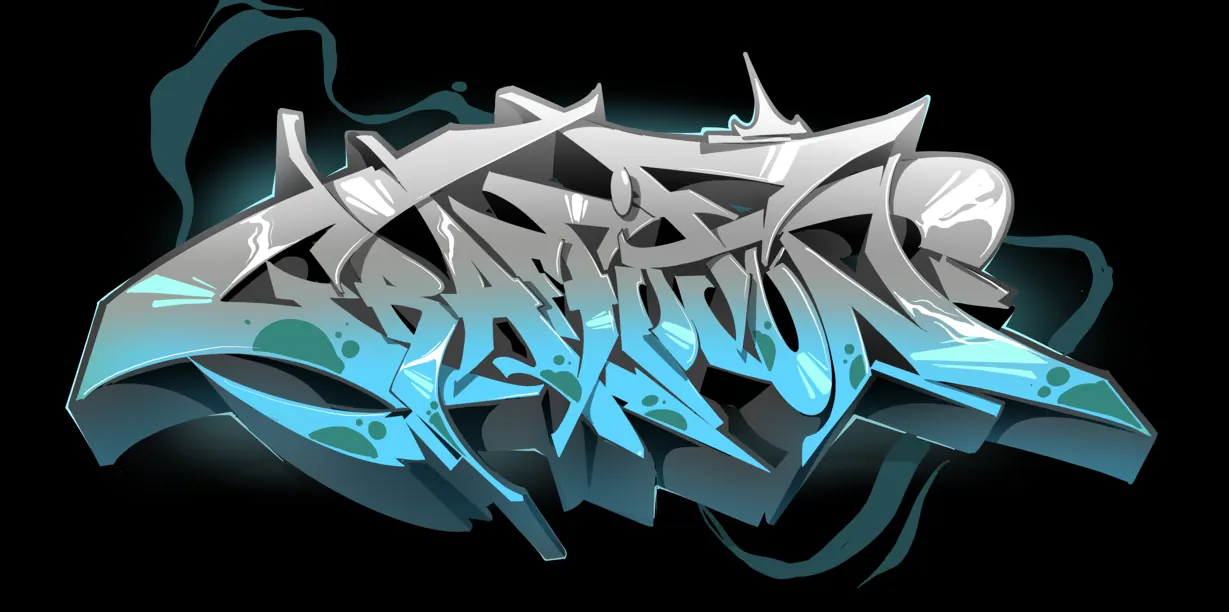
A tag is rarely an isolated skill. It informs how an artist approaches a mural. The way an artist "signs" their work is often the most scrutinized part of a large piece. Furthermore, the principles of tagging—speed, flow, and letter deformation—are the building blocks for the technical shading and 3D effects found in graffiti shading techniques. It is the DNA of the culture.
Expert attribution: years of hands-on experience
This guide was compiled by the expert team at Graffitifun. With years of hands-on experience and a collective of professional graffiti artists, we have taught thousands of individuals the art of the tag. From the streets of global art capitals to high-end corporate training rooms, we have seen firsthand how the simple act of creating a signature can unlock creative potential and build confidence. Our workshops emphasize the balance between historical respect for the craft and modern creative expression.
Frequently asked questions
Keep reading
Ready to Create Your Masterpiece?
Book your graffiti workshop today and discover the artist within! It's going to be AWESOME!