Burner graffiti
Learn what a burner in graffiti is. Discover the history, visual characteristics, and technical skills required to create high-impact aerosol art.
In the vibrant lexicon of urban art, few terms carry as much weight as the burner. While the casual observer might see any large wall of spray paint as a "mural," the graffiti community uses the term burner to distinguish work that displays true technical mastery, elite style, and overwhelming visual impact. A burner is designed to outshine everything around it, setting a gold standard for quality and creativity in aerosol art. At Graffitifun, our professional artists have spent years honing the skills required to create these high-impact works. In this guide, we dive deep into the origins, characteristics, and practical applications of the burner, providing you with a professional insight into one of graffiti's most respected formats.
What is a burner in graffiti?
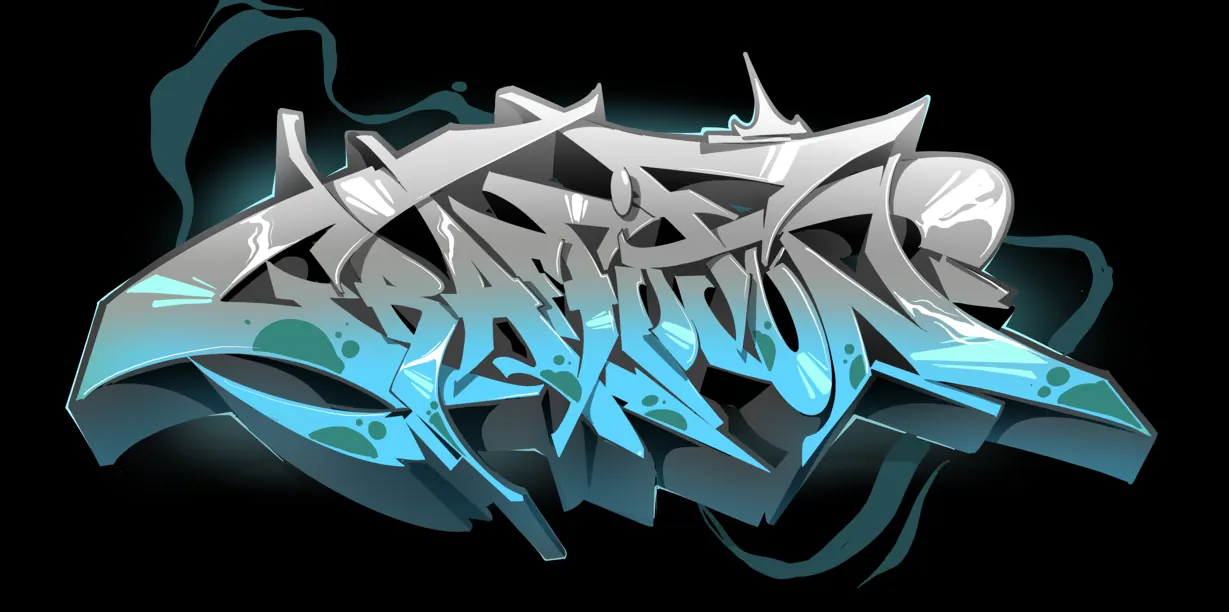
In the world of urban art, a burner is a high-quality, technically proficient, and visually stunning piece of graffiti. The term implies that the work is so good it "burns" off the wall or "burns" the competition. While a standard graffiti piece requires skill, a burner pushes the boundaries of the artist's ability, often featuring complex lettering, elaborate fill-ins, and sophisticated shading techniques. 🎨
A burner is not just about size; it is about the mastery of the medium. It represents the pinnacle of an artist's output at a specific moment in time. Historically, burners were the ultimate goal for writers looking to establish dominance in "writer’s corners" or on train lines, where the visual impact needed to be instantaneous and undeniable.
Historical context: the evolution of the burner
The term "burner" originated in the subway era of New York City during the 1970s and 80s. When a writer managed to paint a "whole-car" or a particularly vibrant "top-to-bottom" piece that outshone everything else on the tracks, it was declared a burner. In the high-stakes environment of early graffiti culture, having a burner meant you held the highest level of respect within the graffiti crew hierarchy.
As the culture transitioned from transit systems to legal walls and international festivals, the definition of a burner evolved. Today, it refers to any large-scale aerosol art that demonstrates exceptional style, clean lines, and innovative color theory. It remains a benchmark for professional artists who have spent decades perfecting their "can control."
Key visual characteristics of a burner
Identifying a burner requires looking beyond the basic letter structures. While a graffiti tag is a quick signature, a burner is a full-scale production. Here are the hallmark traits:
1. Complex lettering and wildstyle influences
Most burners lean towards wildstyle graffiti, where letters are interlocking, stretched, and decorated with arrows and highlights. The structure must be solid; if the foundation of the letters is weak, no amount of color can turn it into a true burner.
2. Advanced fill-in techniques
A burner is never "flat." It utilizes gradients, patterns, bubbles, or even textures within the letters. Professional artists use a variety of cap types to achieve soft fades and razor-sharp details that give the piece a three-dimensional quality.
3. High-contrast outlines and highlights
To make a piece "pop" or "burn," artists use high-contrast colors for the "force field" (the outermost outline) and the "power line." These elements separate the piece from the background, making it visible from a great distance.
4. Technical cleanliness
There are no accidental drips on a burner unless they are intentional design choices. The lines are executed with smooth, confident movements, demonstrating the artist’s physical mastery over the spray can. ⚡
Burner vs. Piece vs. Throw-up
It is important to distinguish a burner from other forms of graffiti to understand its difficulty level.
- Throw-up: A quick, two-color execution focused on speed. See our guide on throw-up graffiti.
- Piece: Short for "masterpiece," this is any painted name with more than one color.
- Burner: An elite-level piece. If every burner is a piece, not every piece is a burner. It requires significantly more time, paint, and technical planning.
The difficulty level: Why burners are for experts
Creating a burner is classified as an advanced level of graffiti. It requires a deep understanding of:
- Color Theory: Knowing which colors complement each other to create maximum vibrance.
- Can Control: Managing pressure and distance to prevent overspray and ensure crisp definitions.
- Scale and Proportion: Maintaining the balance of letters over a large surface area (often 5 to 10 meters wide).
- Patience: A true burner can take anywhere from 6 to 24 hours of active painting.
Practical application: Burners in workshops
At Graffitifun, we believe in showing the full spectrum of urban art. While beginners start with tags and simple blocks, our professional artists often demonstrate "burner" techniques to inspire participants. In a corporate setting, seeing a burner come to life can be a powerful metaphor for excellence and attention to detail.
Corporate branding and team building
For businesses interested in branding workshops, a "corporate burner" involves taking a company logo or values and rendering them with the technical flair of a graffiti burner. This process highlights team cohesion as participants contribute to different sections of a large-scale production under the guidance of a master artist. This is a popular component of corporate team building trends where the goal is to create something "show-stopping" for an office space.
Common misconceptions about burners
Misconception 1: It must be illegal. Modern burners are almost exclusively painted on legal walls or commissioned surfaces. The time required to paint a burner makes it nearly impossible to complete in an unauthorized setting without detection. 🛡️
Misconception 2: It’s just "big" graffiti. Size is secondary to style. A small piece painted with incredible detail and perfect technique can be a "mini-burner," whereas a massive wall that is sloppy and lacks color depth is just a large piece.
Misconception 3: Burners are just for ego. While there is a competitive element, burners are also about community contribution. A high-quality burner improves the visual landscape of a neighborhood and serves as a study piece for younger artists learning the craft.
Summary of the burner process
- The Sketch: Extensive preparation in a "blackbook" (sketchbook) to map out letter connections and 3D perspectives.
- The Buff: Preparing the wall with a base color to ensure the spray paint adheres properly and the colors remain vibrant.
- The Outline: Sketching the skeleton of the piece on the wall using a light color.
- The Fill-in: Applying gradients, patterns, and internal details.
- The Final Outline: Using a dark or high-contrast color to "cut" the edges and make the piece sharp.
- The Extras: Adding shines, highlights, and a background to complete the "burn."
Expert Attribution: Graffitifun Professional Standards
This guide was developed by the Graffitifun editorial team, drawing on over a decade of worldwide experience in urban art education. Our team consists of professional graffiti artists who have spent years mastering the technical requirements of the burner style. At Graffitifun, we prioritize safety and professionalism, ensuring that every workshop—from basic tags to advanced burner demonstrations—provides an authentic and high-quality experience for all participants. If you are looking to see a burner in action or want to try your hand at elite-level aerosol art, our workshops provide the materials, protective gear, and expert guidance needed to succeed.
Frequently asked questions
Keep reading
Ready to Create Your Masterpiece?
Book your graffiti workshop today and discover the artist within! It's going to be AWESOME!