Drips in graffiti
Learn about drips in graffiti: from accidental 'toy' mistakes to professional stylistic choices. Discover history, techniques, and workshop tips.
In the vibrant world of urban art, few elements are as polarizing or as visually striking as drips. Once considered the ultimate sign of a novice—a "toy" who couldn't control their spray can—the drip has evolved into a celebrated stylistic tool used by professional artists globally. Whether they appear as long, ink-heavy runs in a street tag or as carefully rendered 3D effects in a large-scale mural, drips add a sense of movement, gravity, and raw energy to a piece. This article explores the technical causes of drips, their cultural history within the graffiti scene, and how they are used today as a marks of authenticity and professional skill. 🚀
What are drips in graffiti?
In the world of urban art, the term drips refers to the vertical runs of paint that occur when liquid medium—typically aerosol spray or ink—is applied too heavily to a surface, causing gravity to pull the excess pigment downward. While in traditional fine art drips were often viewed as a technical error or a sign of poor craftsmanship, in the graffiti subculture, they occupy a complex position. They can range from a sign of a "toy" (an inexperienced writer) who lacks can control, to a deliberate, stylish aesthetic choice used to convey raw energy, grit, and authenticity.
Drips are most commonly associated with the graffiti tag and the throw-up, where speed is often a factor. However, as the art form has evolved, professional artists have mastered the ability to "fake" or "force" drips, creating perfectly symmetrical, controlled runs that add a liquid, organic feel to complex letters.
The historical evolution of the drip 🎨
The history of the drip in graffiti is intertwined with the evolution of the tools themselves. In the 1970s and 80s, early writers often used industrial spray paints and architectural markers that were not designed for artistic precision. These high-pressure cans and high-flow ink markers naturally produced drips when held in one spot for too long. In the gritty environment of the New York City subway system, these drips became synonymous with the "quick and dirty" nature of illegal tagging.
By the 1990s, as graffiti moved into the gallery space and legal "Halls of Fame," the aesthetic changed. Artists began to appreciate the texture that drips provided. The "clean" look of a graffiti piece could be offset by calculated drips to remind the viewer of the art's rebellious, street-level origins. This transition from "mistake" to "style" is a hallmark of graffiti's maturation as a global art movement.
Visual characteristics and types of drips
Not all drips are created equal. Professional graffiti artists distinguish between various types of drips based on how they are formed and their visual impact:
Natural drips
These occur organically when the paint is applied too thickly. They usually have a tapered look, starting thick at the top and thinning out as they run down the wall. Natural drips are often found in "krink" style tags, named after the high-flow ink brand that popularized the "drippy" look.
Controlled or forced drips
A controlled drip is a deliberate technique where the artist purposefully holds the spray can or marker at a specific point to trigger a run. This allows the artist to decide exactly where the drip starts and ends, ensuring it doesn't obscure vital parts of the letter structure or the fill-in.
Illustrated or "fake" drips
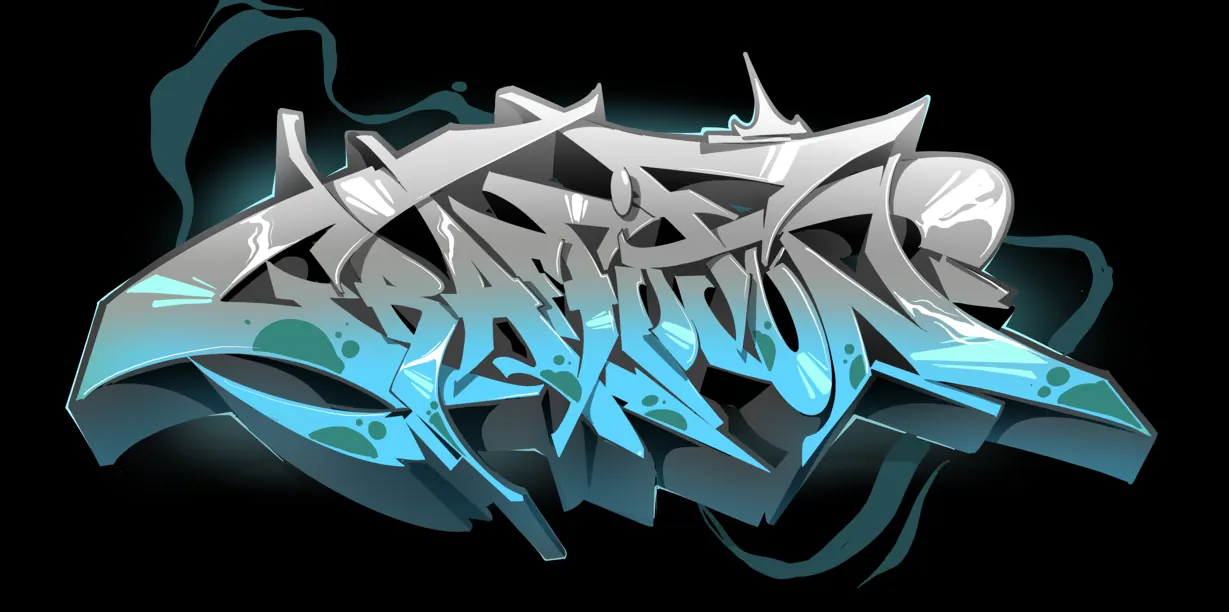
In high-end mural art, artists often paint "fake" drips. These are not caused by running paint at all; instead, they are carefully outlined and shaded to look like 3D liquid. This is common in "slime" or "melting" letter styles, providing a cartoonish or psychedelic effect.
Cultural relevance: Style vs. Lack of skill 💥
The cultural perception of drips is highly contextual. Within the hardcore graffiti community, the "drip" is a double-edged sword. If a writer is attempting a clean, technical wildstyle piece and the paint runs accidentally, it is often seen as a lack of "can control." It suggests the artist was moving too slowly or didn't understand the pressure of their equipment.
Conversely, in the context of a "street-style" aesthetic, drips represent flow and urgency. A tag with long, consistent drips suggests the writer used a marker with a high output, implying they were "juiced up" and ready to leave a bold mark. In contemporary street art, drips are frequently used to bridge the gap between "gritty" street aesthetics and "polished" commercial design, making them a popular choice for branding workshops and corporate commissions.
Practical application: Mastering drips in a workshop
At Graffitifun, we believe that understanding the physics of paint is essential for any aspiring artist. During our workshops, we teach participants how to manage drips through three main factors:
- Distance: How far the can is from the surface.
- Speed: How fast your hand moves across the wall.
- Pressure: How hard you press the nozzle (cap).
For beginners, the first goal is usually preventing involuntary drips. This is achieved by moving the arm in a steady, fluid motion. Once a participant has mastered basic can control, we then explore the creative use of drips. For example, in innovation training sessions, we use the drip as a metaphor for "breaking the rules" and embracing the beauty of imperfection.
Common misconceptions about drips
One of the biggest misconceptions is that drips are "easy" to do. While making paint run is simple, making a drip look good requires a sophisticated understanding of composition. A common mistake is allowing a drip to run through a critical junction in a letter, which can ruin the legibility of the piece. Professional artists use drips to lead the eye through the composition, often placing them at the bottom of letters to create a sense of weight and gravity.
Another misconception is that all drips are a sign of cheap paint. While low-quality, watery paint drips more easily, even professional-grade aerosol art supplies will drip if the artist intends for them to do so. The "drip" is a choice of the artist, not a failure of the medium.
The technical "Why": Why does paint drip?
Scientifically, drips are caused by a breach in the surface tension of the paint. When the volume of liquid applied to a vertical surface exceeds the ability of that surface to "hold" the paint via adhesion, the weight of the liquid overcomes the friction, and gravity pulls it down. Factors like temperature, humidity, and the porosity of the wall (e.g., concrete vs. metal) all play a role in how a drip forms and how far it travels.
Drips in a professional context
In modern urban art education, we see drips used effectively in leadership development programs. The drip represents the "controlled chaos" that leaders must manage. In our graffiti sessions, participants learn that while you can't always control the exact path of a drip, you can control where it starts and how you react to it. This provides a tangible, visual lesson in adaptability and creative problem-solving.
Difficulty level: Intermediate
While making a drip is "Beginner" level, mastering the drip is "Intermediate." It requires the artist to intentionally balance the risk of ruining a piece with the reward of adding stylistic flair. It takes years of hands-on experience to know exactly when to let the paint run and when to keep the line crisp.
Expert Attribution: This guide was developed using the collective knowledge of our professional graffiti artists at Graffitifun. With years of hands-on experience in both street-level tagging and large-scale commercial murals, our team understands the fine line between a technical error and a stylistic masterpiece. Whether you are looking for a gritty street look or a polished corporate mural, our experts have mastered the art of the drip to ensure every project hits the mark.
Frequently asked questions
Keep reading
Ready to Create Your Masterpiece?
Book your graffiti workshop today and discover the artist within! It's going to be AWESOME!