Identity expression through graffiti
Explore the psychology of identity expression through graffiti. Learn how artists use tags, pieces, and crews to build self-esteem and find their voice.
Graffiti is much more than paint on a wall; it is a profound medium for identity expression and psychological exploration. For decades, urban artists have used the cityscape to define who they are, carving out a visual space for their personal narratives. This article explores the deep-seated psychological motivations behind graffiti, from the creation of pseudonyms to the therapeutic benefits of the creative "flow state." Drawing on years of experience in urban art education, we delve into how individuals use spray cans to communicate their inner worlds, build community through crews, and develop a resilient sense of self through professional artistic practice. 🎨
Identity expression is a fundamental human drive. While most people find outlets through traditional career paths, clothing, or digital social media, the graffiti artist utilizes the urban landscape to shout their existence to the world. At its core, graffiti is the visual manifestation of the individual’s psyche, transformed into letterforms and characters that demand recognition. This process of "marking" one’s territory or presence is deeply rooted in human psychology and serves as a powerful tool for self-discovery and social positioning.
The psychological roots of marking presence
The act of writing one's name—or a chosen pseudonym—repeatedly is often misunderstood as mere vanity or destruction. Psychology suggests a much deeper motivation: the need for permanence in a transient world. In urban environments where individuals often feel like "cogs in a machine," graffiti provides a sense of agency. By creating a graffiti tag, the artist establishes a "place-identity," asserting that they are not just passing through the city but are an active part of its fabric.
Research into environmental psychology indicates that the feeling of invisibility in large cities can lead to alienation. Graffiti acts as a psychological defense mechanism against this erasure. When a writer puts up their name, they are engaging in a dialogue with the architecture, transforming cold concrete into a canvas that reflects their internal state. 🎨
Establishing an alter ego: The pseudonym and the persona
In graffiti culture, rarely does an artist use their legal name. The adoption of a "writer name" is a significant psychological step in identity formation. This pseudonym allows for the exploration of a "Shadow Self"—a concept introduced by Carl Jung. The artist can project qualities they might feel unable to express in their everyday life, such as boldness, aggression, or whimsical creativity.
Developing a signature style
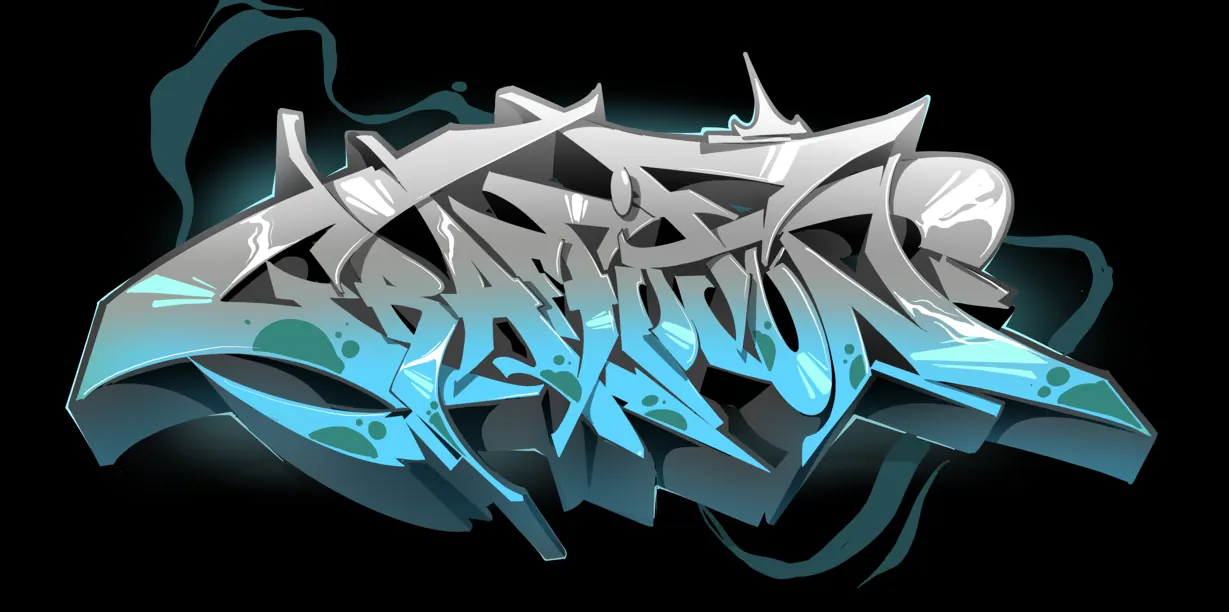
Identity is not just about the name; it is about how that name is written. The evolution from a basic tag to a complex wildstyle piece represents the development of a unique visual "fingerprint." Just as handwriting reveals personality traits, the flow, sharp edges, or rounded bubbles of a graffiti piece signal the artist's temperament and artistic intent. For many, the hours spent practicing in a blackbook are a form of meditative self-reflection, where the artist refines their identity away from public scrutiny.
Group dynamics and the "Crew" mentality
While the individual's identity is paramount, the social psychological aspect of the graffiti crew cannot be overlooked. Humans are inherently social creatures, and the crew provides a sense of belonging and collective identity. 🤝
- Validation: Being part of a crew provides immediate peer-review and validation of one’s skills and identity.
- Protection: Psychologically, the crew offers a safety net, reducing the anxiety associated with the risks of street art.
- Shared Legacy: A crew’s reputation enhances the individual's standing, creating a symbiotic relationship between the person and the collective.
In this context, identity expression becomes both a solo journey and a team effort. The "crew" acts as a micro-society with its own hierarchy, rules, and aesthetic standards, mimicking the tribal structures seen throughout human history.
Measurable outcomes of graffiti as an expressive tool
Modern studies in art therapy and community sociology have identified several measurable benefits to using graffiti as a means of identity expression:
- Increased Self-Efficacy: The successful completion of a complex burner graffiti project boosts the artist's confidence in their ability to execute difficult tasks.
- Emotional Regulation: The physical act of spray painting—moving the whole body to create large strokes—can act as a physical release for repressed emotions.
- Cognitive Problem-Solving: Designing letter structures that interlock requires high-level spatial reasoning and creative problem-solving skills.
Therapeutic applications and workshops
Because graffiti is such an effective tool for identity expression, it has found a home in therapeutic and educational settings. Workshops led by professional graffiti artists allow participants to explore their "inner artist" in a safe, controlled environment. By focusing on the letterforms of their own name or a chosen word, participants engage in a form of "narrative therapy," where they rewrite their own story through paint.
At Graffitifun, we see this transformation daily. When a student chooses a name and begins to fill it with color, they are making choices that reflect their internal preferences. These small choices—choosing certain cap types for specific textures or selecting a vibrant color palette—are all micro-expressions of identity. 🌟
The ritual of the "Piece": From concept to wall
The creation of a graffiti piece is a ritualistic process. It begins with the conceptualization in a sketchbook, moves to the selection of tools, and ends with the physical execution. This ritual helps in grounding the artist. For many, the "flow state" achieved during the painting process is a form of active meditation. In this state, the ego dissolves, and the artist becomes one with the movement and the medium, leading to a profound sense of psychological well-being.
Overcoming the "Fear of the Blank Wall"
The blank wall is a psychological barrier. It represents the unknown and the fear of failure. Learning to overcome this through graffiti workshops teaches resilience. The process of "buffing" (painting over) mistakes and continuing to layer color teaches that identity is not static; it is something that can be refined, painted over, and built upon again and again.
Identity through the lens of urban art education
Education in urban art helps redirect the urge for expression into constructive channels. By understanding the history and techniques of the craft, artists move from "vandalism" to "visual communication." This transition is key to a healthy identity, as it moves the individual from a state of rebellion for rebellion's sake to a state of mastered craftsmanship and community contribution.
Graffitifun's approach emphasizes the "Professional" side of the art form. By learning from veterans who have spent years in the scene, students gain not just technical skills, but a psychological framework for understanding their place in the world as an artist. 🖌️
Conclusion: The lasting impact of the mark
Identity expression through graffiti is a multi-faceted phenomenon. It combines the primeval urge to leave a mark with sophisticated artistic techniques and complex social structures. Whether it is a simple tag or a massive mural, the underlying psychological driver remains the same: "I am here, I am unique, and this is my voice."
Expert Attribution
This article was crafted with insights from the Graffitifun team, drawing on over a decade of hands-on experience in the global street art scene. Our professional graffiti artists have facilitated thousands of workshops, witnessing firsthand the transformative power of urban art on personal identity and self-esteem. We believe that everyone has a unique visual voice waiting to be heard.
Frequently asked questions
Keep reading
Ready to Create Your Masterpiece?
Book your graffiti workshop today and discover the artist within! It's going to be AWESOME!