Urban art curriculum design
A comprehensive guide to urban art curriculum design. Learn about pedagogical value, learning outcomes, and age-appropriate adaptations for street art education.
Designing an effective urban art curriculum involves more than just teaching students how to use a spray can; it is about harnessing the energy of street culture to achieve significant educational and social outcomes. Urban art provides a unique platform for teaching everything from geometry and typography to social justice and community building. This guide outlines how to structure a professional-grade curriculum that balances technical skill with historical context and ethical responsibility. Drawing from years of hands-on experience, our professional graffiti artists have refined a pedagogical approach that ensures safety, engagement, and artistic growth for students of all levels. Whether for a primary school mural project or a secondary school art elective, a well-designed urban art programme can transform the educational experience. 🎨⚡
The pedagogical value of urban art in modern education
Urban art, once relegated to the fringes of society, has evolved into a powerful pedagogical tool. When designing an urban art curriculum, educators tap into a medium that resonates deeply with contemporary youth culture. Unlike traditional fine arts, which can sometimes feel distant or unapproachable, graffiti and street art offer an immediate, tactile connection to the environment. 🎨
The primary value lies in its ability to foster visual literacy. Students learn to decode symbols, understand public messaging, and analyse the intent behind large-scale visual installations. By integrating urban art into a formal curriculum, schools can bridge the gap between "high art" and democratic, accessible creativity. This approach encourages students to view their surroundings not just as physical space, but as a canvas for social and personal expression.
Core learning outcomes
A well-structured urban art curriculum focuses on three main pillars: technical skill, historical context, and ethical responsibility. By the end of a comprehensive programme, students should be able to:
- Identify and execute various graffiti styles, including the graffiti tag and the graffiti piece.
- Understand the evolution of the movement from 1970s New York to global contemporary muralism.
- Demonstrate proficiency in colour theory, typography, and spatial planning (scaling designs from paper to wall).
- Engage in critical thinking regarding public vs. private space and the legalities of street art.
Designing the framework: From theory to practice
An effective curriculum must be sequential. One cannot simply hand a student a spray can and expect a masterpiece; the process requires a foundation in drawing and a deep understanding of letterform structure. ✍️
The importance of the blackbook
Every successful urban art programme begins in the blackbook. This is the student's personal laboratory. Curriculum design should allocate significant time to sketching and refining ideas on paper before transitioning to any permanent surface. This phase teaches patience and the value of iterative design—key components of any creative professional's workflow.
Technical milestones
The curriculum should introduce technical elements in stages:
- Letter Construction: Focusing on "bars" to build consistent, readable letters.
- Can Control: Learning to manage pressure, distance, and speed to avoid unwanted drips in graffiti.
- Nozzle Knowledge: Understanding how different cap types (skinny vs. fat caps) change the line weight and application.
- Layering: Mastering the order of operations, starting with the fill-in and ending with the final outline and highlights.
Adapting for different age groups
Urban art education is not one-size-fits-all. Curriculum design must account for the cognitive and physical development of the students. 🎒
Primary education (Ages 7-11)
For younger students, the focus should be on "safe" urban art. This includes using water-based paint markers, chalk art, or stencils. The curriculum at this level should emphasize vibrant colours, simple character design, and collaborative "community" murals. It is an excellent way to improve fine motor skills through stencil cutting (with safety scissors or pre-cut templates) and large-scale arm movements during painting.
Secondary education (Ages 12-16)
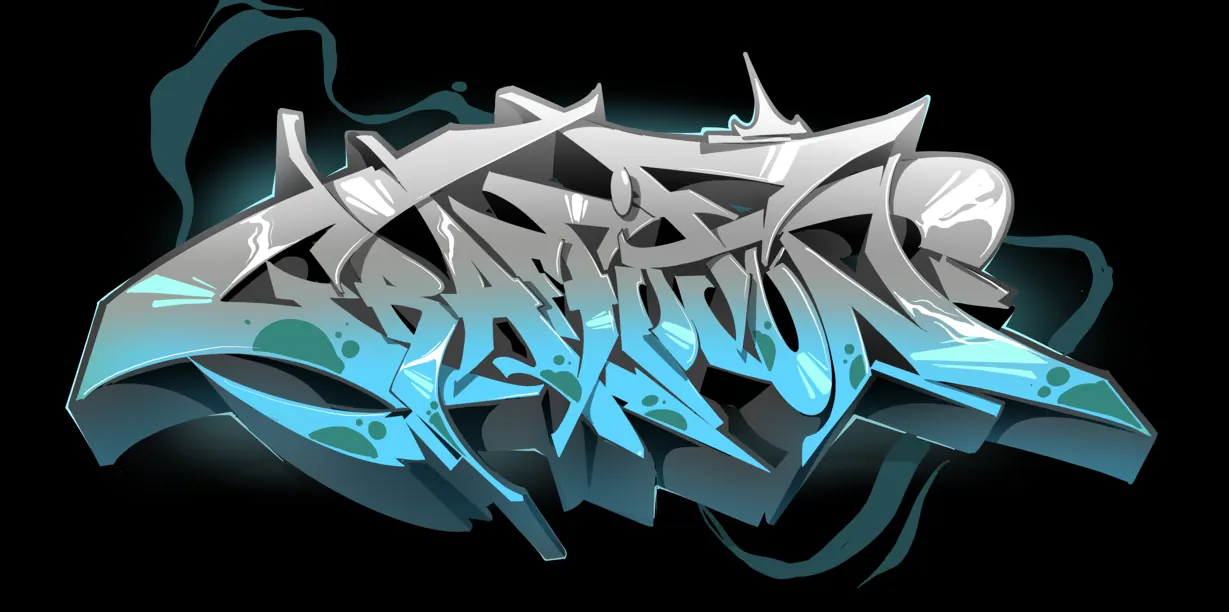
This is where the curriculum can get more technical. Students at this age are often seeking an identity, and the concept of a "moniker" or a unique style is highly appealing. Lessons can dive into the complexity of Wildstyle graffiti, where letters are intertwined and abstracted. At this stage, instructors must also lead discussions on 'permissioned' art versus vandalism, helping students navigate the ethics of the art form.
Higher education and vocational paths (Ages 17+)
For advanced students, urban art curriculum design should focus on professional application. This includes large-scale mural art, project management, and public commissions. Students learn how to use scaffolding, work with community boards, and understand the chemistry of different paint types for longevity.
Social impact and community building
One of the most profound aspects of urban art is its social dimension. Traditionally, graffiti artists work in a graffiti crew, which fosters a sense of belonging and collective achievement. Research indicates that urban art programmes can significantly reduce social isolation and provide an outlet for at-risk youth who may feel alienated by traditional academic subjects.
By transforming a dull school wall into a vibrant mural, students feel a sense of ownership over their environment. This "ownership" often leads to a decrease in illicit vandalism and an increase in school pride. The curriculum should incorporate a final project that serves the community, such as a themed mural for a local hospital or a playground, teaching students that their art has the power to brighten lives and spark conversation. 🤝
Practical workshop integration
A curriculum is only as strong as its implementation. Hands-on workshops are essential. Professional graffiti artists bring a level of authenticity and skill that is hard to replicate. In a workshop setting, students see the theory in action. They observe the "flow" of a professional artist and receive immediate feedback on their can control and posture.
Workshops also provide the necessary infrastructure for safety. Urban art involves aerosols and sometimes heights, requiring a curriculum that prioritizes health and safety protocols, including proper ventilation and the use of respiratory masks. Integrating professional-led workshops ensures that students learn the "right" way from the start, respecting both the medium and the environment.
Evaluating progress in urban art
Assessment in an urban art curriculum can be challenging but rewarding. Rather than just grading a final piece, educators should assess the development of the student’s "style" over time. 📈
- Portfolios: Digital or physical collections of sketches and photos of finished works.
- Critiques: Peer-to-peer feedback sessions where students explain their stylistic choices.
- Technique Tests: Simple demonstrations of specific skills, like creating a clean taper or a smooth gradient.
Expert Attribution: This guide was developed with insights from our professional graffiti artists who have years of hands-on experience in urban art education. At Graffitifun, we specialise in translating the raw energy of street art into structured, pedagogical experiences that inspire and educate students of all ages worldwide. Our team focuses on safety, technical mastery, and the positive social impact of urban creativity.
Frequently asked questions
Keep reading
Ready to Create Your Masterpiece?
Book your graffiti workshop today and discover the artist within! It's going to be AWESOME!