Creativity development
Discover how graffiti and urban art workshops drive creativity development. Learn about pedagogical value, social impact, and age-appropriate art education.
Creativity is more than just an artistic talent; it is a vital life skill that empowers individuals to solve problems, communicate ideas, and express their unique identities. In the world of education, urban art and graffiti have emerged as powerful tools for creativity development. By stepping away from the traditional easel and onto the large-scale canvas of the wall, learners of all ages can unlock new levels of imaginative thinking. This article explores how the vibrant world of graffiti—from the precision of a tag to the complexity of a piece—serves as a catalyst for cognitive growth, social cohesion, and pedagogical innovation. With years of experience in urban art education, we dive deep into why the spray can is the ultimate tool for modern creative learning. 🎨✨
The role of graffiti in creativity development
Creativity is often misunderstood as a fixed trait, but professional graffiti artists and educators recognise it as a dynamic skill that can be nurtured through specific practices. Graffiti and street art provide a unique framework for this development because they break away from the rigid "right or wrong" constraints found in traditional art classrooms. By engaging with spray cans and large-scale canvases, learners are forced to think outside the box—quite literally.
In the context of urban art, creativity is not just about making something look "pretty." it is about problem-solving, spatial awareness, and personal expression. When a student picks up a spray can for the first time, they aren't just painting; they are learning to manage pressure, distance, and motion. This physical engagement with art triggers different cognitive pathways than drawing on paper, leading to enhanced divergent thinking—the ability to generate multiple solutions to a single problem. 🎨
Learning outcomes and pedagogical value
Integrating urban art into educational curricula yields several high-value learning outcomes. Pedagogy in this field focuses on the transition from a conceptual idea in a blackbook to a large-scale execution. Key learning outcomes include:
- Visual Literacy: Developing the ability to interpret and create complex visual messages using typography and colour theory.
- Spatial Reasoning: Translating small sketches into large-scale murals requires a sophisticated understanding of proportions and scale.
- Technical Mastery: Understanding technical variables such as cap types to achieve specific visual effects.
- Resilience: Graffiti is a layered process. Mistakes are often "buffed" or painted over, teaching learners that errors are merely steps in the creative journey.
Creative problem solving and the "Flow State"
One of the most profound impacts of graffiti on creativity development is the attainment of the "flow state." This is a mental state where an individual is fully immersed in an activity, losing track of time and self-consciousness. Professional artists often experience this during the fill-in phase of a large piece. For students, reaching this state through urban art builds confidence and reduces the anxiety often associated with "perfect" academic performance. 🚀
From tags to masterpieces: A ladder of complexity
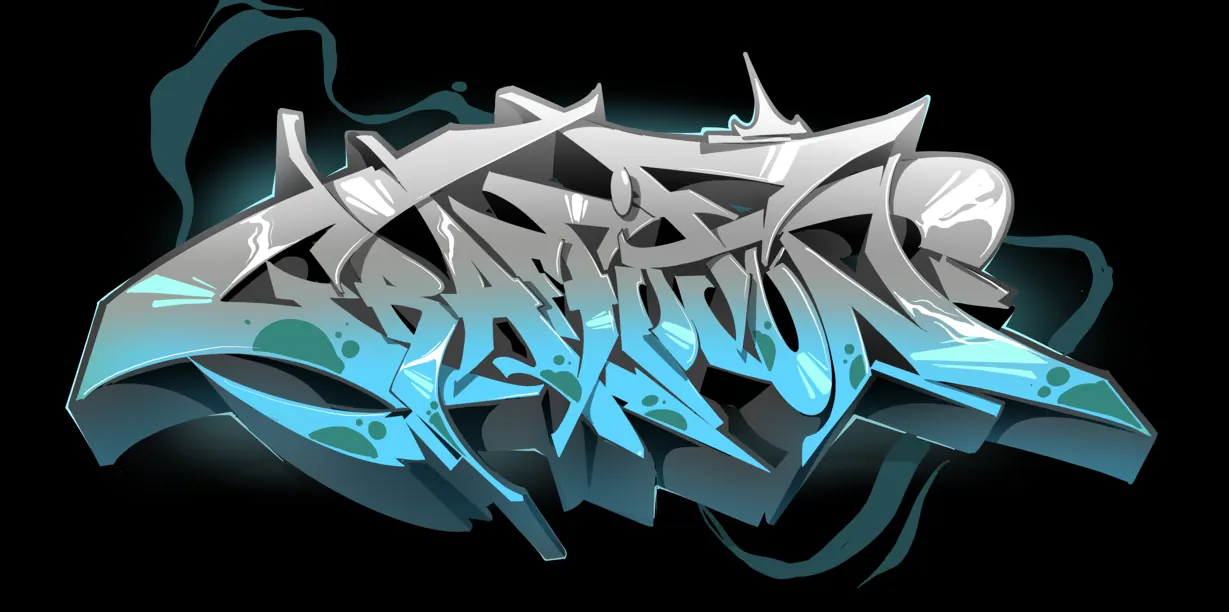
The development of creativity in urban art follows a structured progression. We often start with the basics of a graffiti tag. While often misunderstood by the public, the tag is the foundation of calligraphic skill and speed. From there, learners progress to a "throw-up," focusing on bubble letters and efficiency. Eventually, they move toward a complex graffiti piece, where advanced concepts like 3D depth, highlights, and intricate colour palettes come into play.
Social impact and collaborative creativity
Urban art is rarely a solitary pursuit. The concept of a graffiti crew highlights the social dimension of creativity. Working together on a mural teaches vital soft skills:
- Negotiation: Deciding on a colour scheme or theme requires compromise and collective vision.
- Constructive Criticism: In a workshop environment, peers provide feedback that helps refine the final output.
- Community Ownership: Creating art in a public or shared space fosters a sense of belonging and pride within a group.
Age-appropriate adaptations for workshops
To maximise creativity development, the approach must be tailored to the developmental stage of the participant. Professional instructors adjust their methods to ensure safety and engagement across all age groups.
Primary school (Ages 6-11)
At this stage, the focus is on "uninhibited expression." Children are encouraged to explore movement and large shapes. We often use water-based markers or low-pressure cans. The goal is to build fine motor skills and introduce the idea that art can be larger than a piece of A4 paper. We focus on simple characters and bold, bright colours.
Secondary school (Ages 12-17)
Teenagers often use graffiti as a tool for identity formation. The pedagogical focus shifts to technical skill and letter structure. This is where we introduce the mechanics of letter-based graffiti. The challenge is to help them move from "copying" styles to "creating" their own unique identifiers. This stage is critical for developing authentic self-expression.
Adults and professional development
For adults, the workshop environment serves as a "creative reset." In a world dominated by digital screens, the tactile nature of spray painting offers a therapeutic release. Creativity development here focuses on breaking down "creative blocks" and encouraging risk-taking in professional or personal life. 🌟
Practical workshop application: The Graffitifun approach
Through years of hands-on experience, our professional graffiti artists have developed a curriculum that balances technical instruction with creative freedom. A typical workshop designed for creativity development follows these steps:
- Conceptualisation: Participants sketch ideas, focusing on the flow and "swing" of letters.
- Material Education: Learning about can control and how different nozzles (caps) change the output.
- The Outline: Translating the sketch to the surface, focusing on scale and proportion.
- The Creative Fill: Experimenting with colour blends and textures like drips.
- The Final Detail: Adding highlights and "power lines" to make the work pop.
The long-term benefits of urban art education
The skills developed during a graffiti workshop extend far beyond the wall. Students who engage in urban art education report higher levels of confidence in other academic subjects. The ability to visualize a project from start to finish, manage resources (paint), and work within a timeframe are all transferable skill sets. Furthermore, the inclusive nature of graffiti—where no previous art experience is required—makes it an excellent "equaliser" in educational settings, allowing students who might struggle in traditional subjects to shine.
Expert perspective: The Graffitifun philosophy
At Graffitifun, our mission is to use urban art as a bridge to self-discovery. Our instructors are not just artists; they are facilitators of creative growth. With decades of combined experience in the street art scene, we understand the nuances of the craft and how to translate them into a constructive learning environment. We believe that everyone has a "creative spark" and that the spray can is one of the most effective tools to ignite it. By focusing on safety, technique, and fun, we provide a platform where imagination knows no bounds. 🎨✨
This article was created with input from our professional team of graffiti artists, drawing on years of international experience in conducting workshops and community art projects.
Frequently asked questions
Keep reading
Ready to Create Your Masterpiece?
Book your graffiti workshop today and discover the artist within! It's going to be AWESOME!