Global graffiti scenes
Explore the history and evolution of global graffiti scenes. Learn about NYC roots, European styles, Brazilian Pichação, and the impact of the digital age.
The global graffiti scene is a vibrant, ever-evolving tapestry of culture, rebellion, and artistic innovation. From its humble beginnings as simple signatures on city walls to the massive, multi-story murals that define modern metropolises, graffiti has become a universal language of urban expression. This article explores the chronological development of graffiti, tracing its roots from the 1970s New York subway era to its current status as a worldwide phenomenon. Whether you are a budding artist or an urban art enthusiast, understanding the key movements and cultural significance behind these global scenes is essential. Backed by years of hands-on experience, our professional graffiti artists at Graffitifun provide a deep dive into how local styles merged to create a powerful global movement. 🌍✨
The evolution of a global movement
Graffiti, once viewed primarily through the lens of local vandalism, has transformed into a sophisticated global visual language. From the subway cars of 1970s New York to the towering murals of contemporary Berlin and São Paulo, the "global graffiti scene" represents one of the most significant art movements in human history. To understand this evolution, one must look at how local styles merged with a universal desire for self-expression, bolstered by the expansion of hip-hop culture and the eventual rise of the internet.
The New York foundation and the subway era
While various forms of inscriptions have existed since antiquity, the modern graffiti movement found its DNA in the urban landscapes of Philadelphia and New York City during the late 1960s and early 1970s. Writers like Cornbread in Philly and Taki 183 in NYC pioneered the basic graffiti tag. However, the movement truly exploded when it hit the New York City Subway system. The trains acted as moving galleries, carrying a writer's name across all five boroughs, forcing the city to take notice.
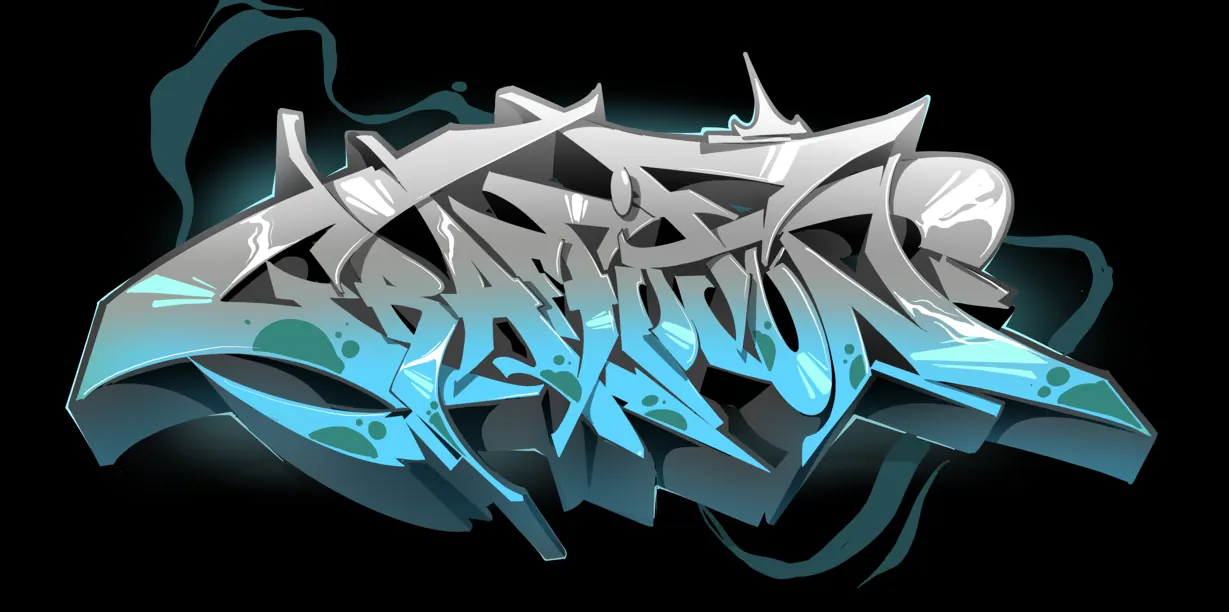
During this period, the competition for visibility led to massive technical innovations. Writers began experimenting with scale, leading to the throw-up—a quick, bubble-lettered execution—and eventually the graffiti piece (short for masterpiece). The development of wildstyle, characterized by complex, interlocking letters, created a visual code that required insiders to "read" the art, further cementing the subculture's identity.
European expansion: From trains to street galleries
By the 1980s, the "Style Wars" of New York were being documented in films and books, exporting the culture to Europe. Major cities like London, Paris, Amsterdam, and Berlin adopted the aesthetic but quickly infused it with local sensibilities. In Paris, the scene took a more graphic and poetic turn, while in Amsterdam, the "punk graffiti" influence met the New York style, creating a distinct, aggressive aesthetic. 🎨
Berlin: The wall as a canvas
Berlin holds a unique place in the global graffiti scene. Before the fall of the Berlin Wall, the West side of the concrete barrier became one of the largest canvases in the world. After 1989, the abundance of abandoned buildings in East Berlin provided a playground for artists. Today, Berlin remains a European hub where traditional letter-based graffiti coexists with massive commercial and artistic mural art. The city’s history of division and reunification is literally etched into its walls, showing how graffiti can reflect geopolitical shifts.
South American "Pichação" and the rise of murals
While North America and Europe were perfecting the "New York style," Brazil was developing something entirely unique. In São Paulo, the practice of Pichação emerged. This is a distinct form of cryptic, vertical tagging inspired by the font styles of 1980s heavy metal album covers. Unlike colorful North American pieces, Pichação is often monochromatic and prioritizes risk and height.
Conversely, Brazil also birthed some of the most world-renowned muralists. The influence of South American graffiti often includes vibrant colors, indigenous themes, and social commentary. This blend of aggressive tagging and high-concept muralism has made South America a cornerstone of the modern global scene.
The role of technology in globalizing the scene
Before the digital age, graffiti was shared through "fanzines" and physical photographs. A writer would carry their blackbook to meetups, showing sketches to others to prove their skill. The 1990s and 2000s changed everything. The internet allowed an artist in Tokyo to see what a writer in Los Angeles had painted just hours earlier. 🌐
This instant connectivity led to both a homogenization of style and a rapid acceleration of technique. Artists began sharing secrets about cap types and paint brands. Today, social media platforms serve as the primary "yard" where artists compete for "fame," though many traditionalists argue that true credibility is still earned on the streets rather than on a screen.
Graffiti culture today: Beyond the aerosol can
Modern graffiti has branched out into various sub-genres. While letter-based graffiti remains the core, the scene now encompasses:
- Street Art: Using stencils, stickers, and wheatpastes to convey messages.
- Abstract Graffiti: Moving away from legibility entirely to focus on form and color (see abstract graffiti).
- 3D Graffiti: Utilizing lighting and perspective to make letters pop off the wall (see 3D graffiti).
- Legal Murals: Large-scale commissioned works that revitalize urban areas.
The cultural significance of graffiti in the 21st century cannot be overstated. It has influenced fashion, graphic design, and advertising. Most importantly, it remains a voice for the voiceless—a way for individuals in dense urban environments to reclaim public space and assert their existence.
Practical application: Learning the global language
For those looking to transition from an admirer to a practitioner, understanding this history is vital. Every stroke in a graffiti piece carries the weight of those who came before. In a professional workshop setting, students learn that graffiti isn't just about "spraying paint"; it’s about control, letter structure, and respect for the community.
By studying global scenes, aspiring artists can see how a simple fill-in technique in New York might differ from a "soft" style in Scandinavia. This knowledge helps students develop their own unique voice, contributing to the next chapter of this ever-evolving global story. 🖌️
Expert Attribution: The Graffitifun Perspective
At Graffitifun, we draw from decades of collective experience in the global graffiti scene. Our professional graffiti artists have witnessed the transition of this culture from underground subculture to a global pedagogical tool. Through years of hands-on experience in various international cities, our team brings an authentic, expert perspective to every workshop. We believe that by teaching the history and techniques of global graffiti, we foster a deeper appreciation for urban art and provide students with the high-quality, professional guidance needed to master this complex craft.
Frequently asked questions
Keep reading
Ready to Create Your Masterpiece?
Book your graffiti workshop today and discover the artist within! It's going to be AWESOME!