Hip-hop and graffiti connection
Explore the deep historic bond between hip-hop and graffiti. Learn about the four pillars, the Bronx roots, and how urban art evolved with music.
The bond between hip-hop and graffiti is one of the most significant cultural alliances of the 20th century. Born in the vibrant, concrete landscape of New York City during the 1970s, these two art forms grew side-by-side as a means of survival and self-assertion for marginalized youth. While graffiti provided a visual voice, hip-hop provided the rhythmic heartbeat of the streets. Today, this connection remains a cornerstone of urban art education. At Graffitifun, we draw on years of hands-on experience to explore how spray paint and subwoofers came together to change the world forever. Understanding this history isn't just about art—it's about understanding a movement that redefined global culture. 🎧🎨
The four pillars of hip-hop culture
To understand the connection between hip-hop and graffiti, one must first look at the "Four Pillars" of the culture as defined by the pioneers of the South Bronx in the 1970s. These pillars include MCing (rapping), DJing, Breaking (breakdancing), and Graffiti. While each element has its own technical requirements and history, they are inextricably linked by a shared spirit of competition, innovation, and self-expression. 🎤
A shared environment: The Bronx in the 70s
The synergy between these arts was born of necessity. In a socio-economically neglected New York, young people turned to the streets to build their own systems of status and community. A DJ would set up a sound system in a park; an MC would hype the crowd; B-boys and B-girls would battle on the pavement; and the walls and subway cars surrounding them would be covered in vibrant lettering. This was a holistic lifestyle where an artist might be a "writer" (graffiti artist) by day and a "breaker" by night.
Chronological development of the connection
Graffiti actually predates the musical and dance elements of hip-hop by a few years, with early pioneers like Cornbread in Philadelphia and Taki 183 in New York City gaining notoriety in the late 60s and early 70s. However, as the block party culture evolved, graffiti provided the visual identity for the music.
The 1980s: The golden era of crossover
The 1980s saw the formalisation of this connection. Films like Wild Style and Style Wars showcased graffiti writers alongside DJs and rappers, cementing the idea in the public consciousness that you could not have one without the other. This was the era where a Graffiti piece was no longer just a name on a wall; it was the backdrop for music videos and stage designs. During this time, the development of a Graffiti crew often mirrored the structure of hip-hop "posses" or rap groups, focusing on collective strength and territory.
Key movements and stylistic evolution
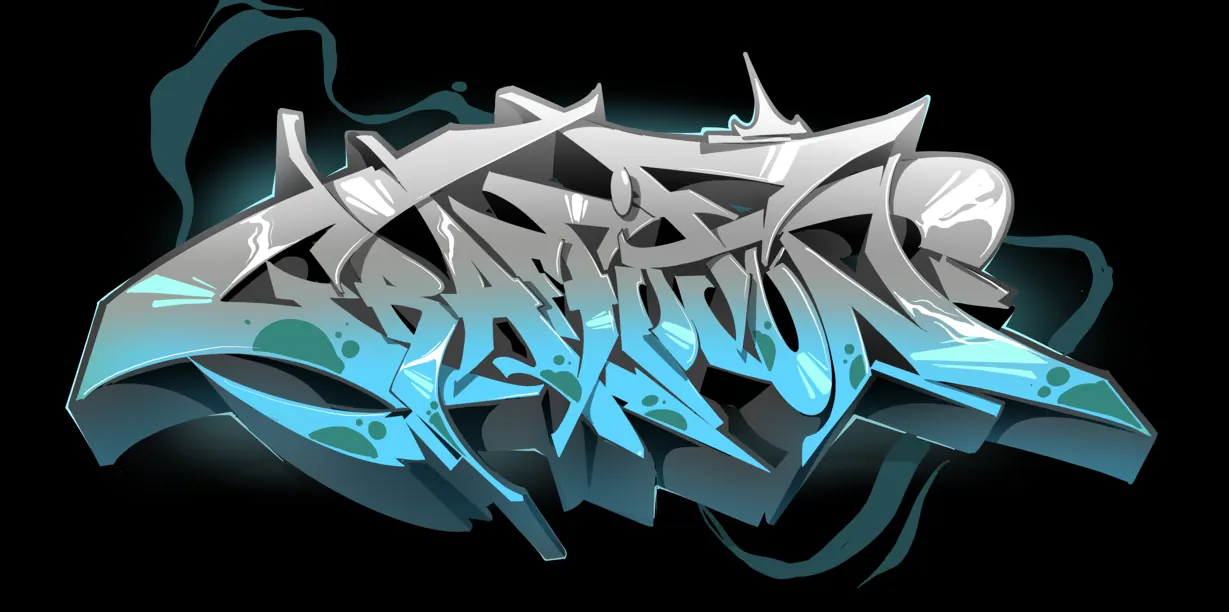
The visual language of graffiti evolved in tandem with the complexity of hip-hop music. As DJs began scratching and mixing more "wild" sounds, graffiti artists developed Wildstyle. This style involved interlocking letters so complex that they were often "uncrackable" to the uninitiated, much like the coded slang used by MCs.
From the subway to the gallery
As the "Transit Authority" in NYC began its crackdown on "running" trains, artists moved toward "trackside" spots and rooftops. Simultaneously, the burgeoning hip-hop industry began hiring graffiti artists to design album covers and logos. This commercialisation helped spread the "look" of hip-hop globally, ensuring that when kids in London, Tokyo, or Berlin heard the music, they also saw the spray paint.
Cultural significance: Reclaiming space and identity
The hip-hop and graffiti connection is fundamentally about reclaiming space. In an urban environment where young people of colour and lower-income families were often ignored, the "tag" was a way of saying "I am here." This "battle for visibility" is why a Graffiti tag is so vital; it is the most basic signature of existence. In our workshops, we emphasize that these tags aren't just scribbles; they are the rhythmic signatures of an artist’s identity, much like a rapper's unique flow. 🎨
Competition and the "Burner" mentality
Hip-hop is inherently competitive. Rappers battle via lyrics, dancers via moves, and graffiti writers via "burning." A Burner graffiti piece is one so aesthetically superior that it "burns" the competition. This drive for excellence pushed artists to experiment with Cap types to achieve thinner lines or wider fades, mirroring how DJs pushed the limits of their turntables.
The global spread of the movement
By the 1990s, hip-hop had become a global phenomenon. Graffiti was the easiest "pillar" to export because its remnants stayed on the walls of cities worldwide. International artists looked to NYC styles but began incorporating their own local calligraphy and cultural motifs. Today, graffiti and street art have branched into diverse styles like 3D graffiti and Abstract graffiti, yet most professional artists still acknowledge the hip-hop roots that gave birth to the culture.
Modern relevance: Is the connection still alive?
While graffiti has expanded into the "Street Art" movement, which often distances itself from hip-hop, the core connection remains. Modern street festivals often feature live graffiti painting alongside DJ sets and breakdance battles. In the digital age, social media has replaced the subway car as the primary vehicle for visibility, but the "style wars"—the competition to have the most unique and technically proficient lettering—continue unabated.
Applying tradition in modern workshops
At Graffitifun, we believe that learning the history of the hip-hop connection is essential for any aspiring artist. When we teach a Fill-in or explain the importance of Drips in graffiti, we are teaching more than just technique; we are teaching a lineage of urban expression. Understanding why the letters lean a certain way or how the rhythm of the spray can mimics a drum beat makes the art form richer for the participant.
Conclusion: A legacy of urban empowerment
The connection between hip-hop and graffiti is not a historical coincidence; it is a shared DNA of resilience and creativity. From the early days of tagging subway cars to the massive Mural art projects of today, the spirit of hip-hop remains the heartbeat of the spray-paint world. By respecting these roots, we ensure that the next generation of artists carries forward a legacy of empowerment and community. 🏙️
Expert attribution
This article was written by the expert team at Graffitifun. With years of hands-on experience in the streets and in the studio, our professional graffiti artists have lived the history of this culture. We have spent decades facilitating urban art education, ensuring that the authentic connection between hip-hop and graffiti is preserved and shared with the world through high-quality workshops and professional projects.
Frequently asked questions
Keep reading
Ready to Create Your Masterpiece?
Book your graffiti workshop today and discover the artist within! It's going to be AWESOME!